Growth hormone secretagogue

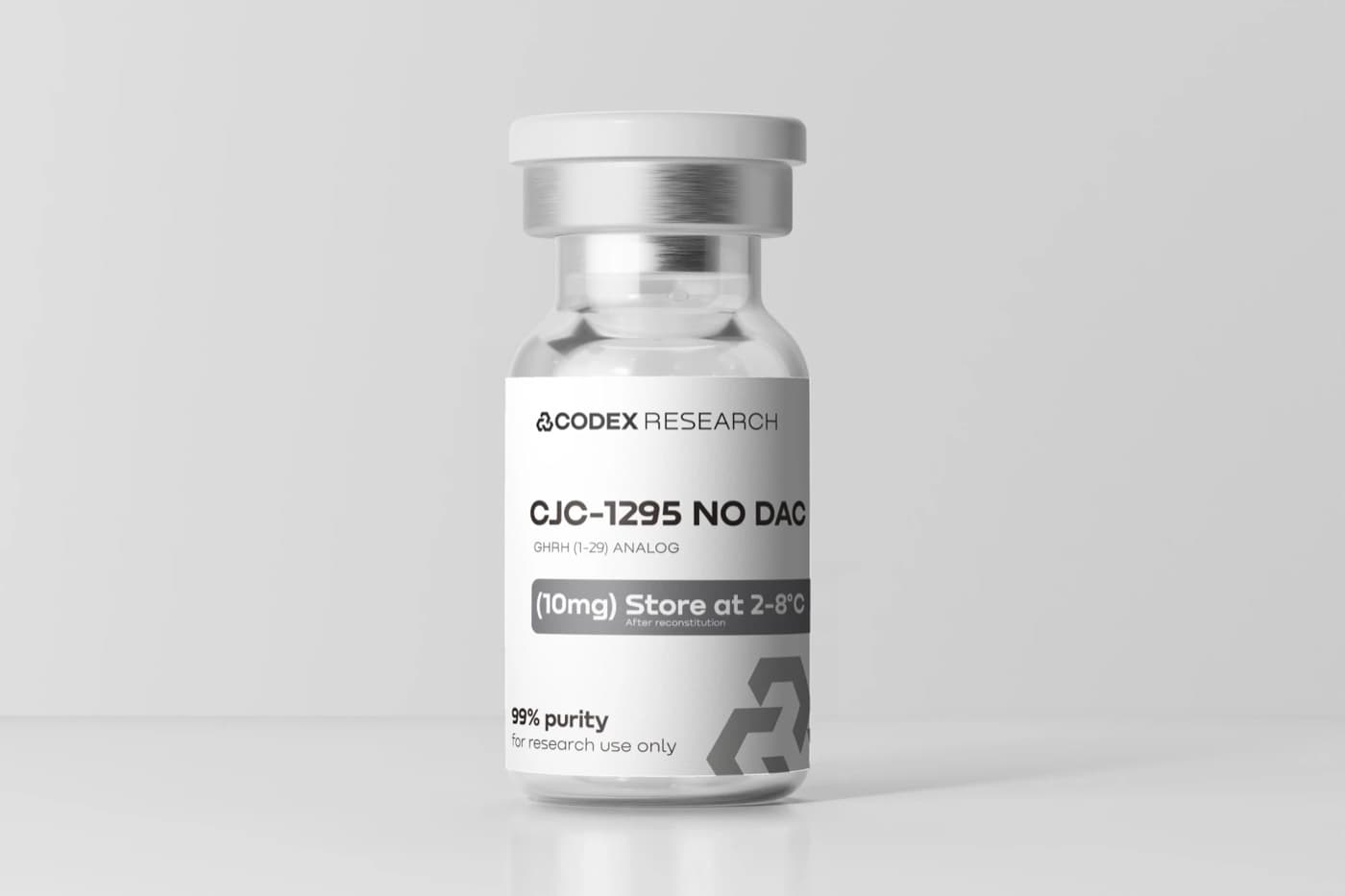
CJC-1295 (10 mg vial) dosage protocol

Dosage chart, U-100 syringe units and supplies for a 10 mg vial of CJC-1295 mixed with 3 mL. For the full research summary, see the CJC-1295 page.

01

CJC-1295 quick reference (10 mg vial)

Vial contents
10 mg CJC-1295
Final volume
3 mL
Concentration
3.33 mg/mL
One U-100 unit
33.3 mcg in 0.01 mL
02

CJC-1295 dosage chart

Amounts as reported for this peptide, with the syringe measure for this vial. Reported use is not evidence that a schedule works or is safe, and none of this is medical advice.

No DAC, gradual, once daily

  • Subcutaneous injection, once a day
  • Community-reported

Reported in the research community. It has not been tested as a schedule in human trials. Worked out with a 10 mg vial + 3 mL bacteriostatic water (3.33 mg/mL, 33.3 mcg per unit).

Amounts as reported, with the syringe or spray measure for the vial below. Not a recommendation.
PeriodAmount each timeU-100 unitsVolume
Weeks 1-2100 mcg30.03 mL
Weeks 3-4150 mcg4.50.05 mL
Weeks 5-6200 mcg60.06 mL
Week 7 on250-300 mcg7.5-90.08-0.09 mL

Reconstitution steps

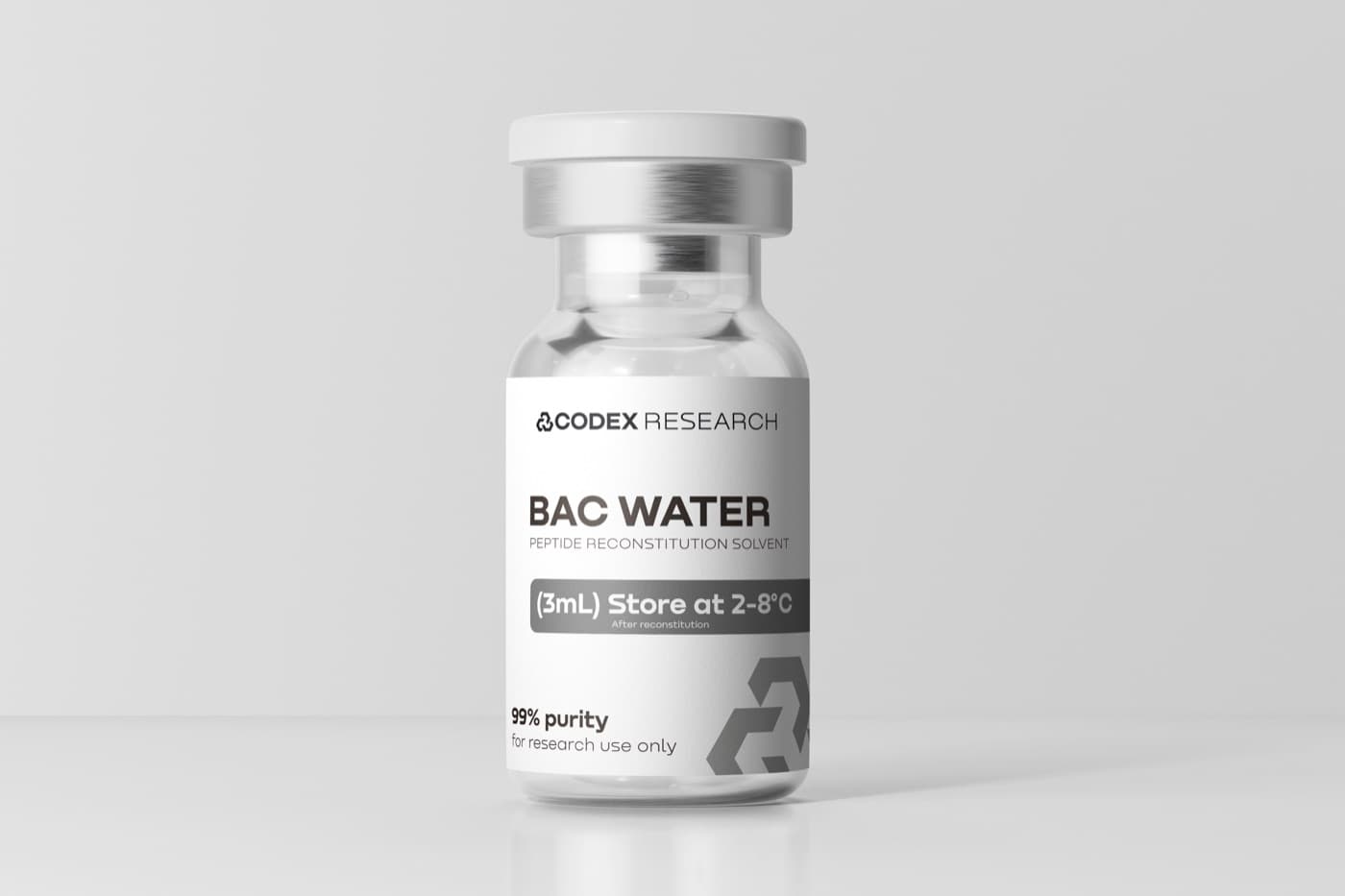
  1. Draw 3 mL of bacteriostatic water with a sterile syringe.
  2. Inject it slowly down the inside wall of the vial, not onto the powder, to avoid foaming.
  3. Swirl or roll the vial gently until the powder dissolves. Do not shake it.
  4. Label it with the date and the volume of water, and refrigerate at 2-8 °C (36-46 °F), away from light.
03

Supplies needed

Minimum supplies for each length of the schedule above, with 10 mg vials and 3 mL of water per vial. One new syringe per injection (two if over 1 mL), two alcohol swabs per injection, 10 mL water bottles.

No DAC, gradual, once daily

  • Subcutaneous injection, once a day
  • Community-reported
Minimum supplies, worked out from the amounts above. Add a margin for losses.
Item8 weeks12 weeks16 weeks
Injections5684112
Total peptide10.5 mg18.9 mg27.3 mg
CJC-1295 vials (10 mg)223
Bacteriostatic water6 mL6 mL9 mL
Water bottles (10 mL)111
U-100 insulin syringes5684112
Alcohol swabs (boxes of 100)112 (2)168 (2)224 (3)

Research supplier

For laboratory research use only.

Codex Research LabShips from Panama City · US domestic shipping

04

Peptide reconstitution

Try other volumes of water: the concentration and the units per amount change with it.

Reconstitution calculator

Arithmetic only. It assumes the vial holds exactly what the label says.

Concentration
3,333 mcg/mL
Per U-100 unit
33.33 mcg
Volume for your amount
—
Concentration of a 10 mg vial after adding the liquid, and peptide per U-100 unit (0.01 mL).
Liquid addedConcentrationPer unit
1 mL10,000 mcg/mL100 mcg
2 mL5,000 mcg/mL50 mcg
3 mL3,333 mcg/mL33.3 mcg
05

CJC-1295 vial and research context

  • Reconstitute: add 3 mL of bacteriostatic water for a 3.33 mg/mL solution.
  • Amounts in the chart: 100 mcg-300 mcg each time, by subcutaneous injection, once a day.
  • Easy measuring: at 3.33 mg/mL, one unit (0.01 mL) on a U-100 insulin syringe holds about 33.3 mcg.
  • Storage: freeze-dried, keep it sealed, cold and away from light (frozen for long storage). Once mixed, refrigerate at 2-8 °C and avoid freezing and thawing.

CJC-1295 is a synthetic analogue of growth hormone-releasing hormone designed to bind to albumin in the blood so it lasts for days. The short-acting "no DAC" version sold under the same name has no published human studies, and neither version is FDA-approved.

06

CJC-1295 10 mg protocol overview

  • Primary calculation: 10 mg made up to 3 mL equals 3.33 mg/mL.
  • Amounts shown: 100 mcg-300 mcg per administration. Reported in the research community. It has not been tested as a schedule in human trials.
  • Route and frequency: subcutaneous injection, once a day.
  • Evidence ceiling: 3 of the 6 studies with a dose in our library were done in people.
  • Regulatory status: Not FDA-approved for any use. WADA: Prohibited at all times (growth hormone releasing factors).
07

How to read the CJC-1295 dosage chart

A 10 mg vial holds 10,000 mcg of CJC-1295. Adding 3 mL gives 3.33 mg/mL, so one U-100 unit (0.01 mL) holds 33.3 mcg. To get the units for an amount, divide it by 33.3 mcg. The units are a volume mark on the syringe, not a measure of potency.

  • 100 mcg: 0.03 mL, or 3 U-100 units.
  • 150 mcg: 0.05 mL, or 4.5 U-100 units.
  • 200 mcg: 0.06 mL, or 6 U-100 units.
  • 250 mcg: 0.08 mL, or 7.5 U-100 units.
  • 300 mcg: 0.09 mL, or 9 U-100 units.

Vial coverage by mass: 100 full amounts of 100 mcg, 66 full amounts of 150 mcg, 50 full amounts of 200 mcg, 40 full amounts of 250 mcg, 33 full amounts of 300 mcg per vial, before any handling loss.

If a different volume of water is used, every unit figure changes: recalculate with the calculator above.
08

Human CJC-1295 dosage evidence

All the published human data are for CJC-1295 with DAC, in healthy adults:

  • Dose-finding trials: two randomised, placebo-controlled, double-blind trials gave single or repeated injections under the skin. One injection raised growth hormone 2- to 10-fold for 6 days or more and IGF-1 1.5- to 3-fold for 9 to 11 days. With repeated doses, IGF-1 stayed above baseline for up to 28 days. No serious adverse reactions were reported (Teichman 2006).
  • Hormone pulses: in healthy men aged 20 to 40, one injection of 60 or 90 µg/kg kept the natural on-off pattern of growth hormone release but raised the baseline between pulses 7.5-fold, mean growth hormone by 46% and IGF-1 by 45% one week later (Ionescu 2006).
  • Blood proteins: in 11 healthy young men, one week after an injection, several blood proteins changed and one correlated with IGF-1 levels. The authors studied them as possible markers of growth hormone activity (Sackmann-Sala 2009).

In short: the DAC version clearly raises growth hormone and IGF-1 for days to weeks in healthy adults, but these were small, short studies that measured hormone levels, not health outcomes. There are no published human data on the version without DAC, and the one patient trial was stopped without published results.

Doses used in human studies

  • Teichman SL 2006: Study 1: one of four ascending single doses. Study 2: two or three doses given weekly or every two weeks. The abstract names 30 and 60 µg/kg as the best tolerated; full dose levels are in the paper (Subcutaneous; 28 and 49 days)
  • Ionescu M 2006: 60 or 90 µg/kg, single injection (Subcutaneous, single injection; Measured before and 1 week after the injection)

Every study dose, including animal and cell studies, is in the CJC-1295 dose table.

09

CJC-1295 safety, side effects and evidence limits

Human safety data come from small groups of healthy adults followed for up to about 7 weeks. No serious adverse reactions were reported, and the authors described doses of 30 or 60 µg/kg as relatively well tolerated (Teichman 2006). Long-term effects are unknown.

  • Two products, one name: the version with DAC lasts about a week in the body; the version without DAC is expected to last a much shorter time. A vial labelled only "CJC-1295" may contain either, so the exposure can differ greatly from what the buyer expects (Henninge 2010).
  • Long-lasting exposure: with a half-life of about a week, the effects of the DAC version cannot be stopped quickly if side effects appear.
  • Sustained IGF-1 rise: IGF-1 is a growth factor. The long-term effects of keeping it raised for weeks or months have not been studied for CJC-1295.
  • Pituitary changes: in mice, CJC-1295 increased the number of growth hormone-producing cells in the pituitary (Alba 2006). Whether this happens in people is unknown.
  • Product quality: products sold online are not checked by any regulator for identity, purity, dose or sterility.
  • Sport: growth hormone releasing factors, including CJC-1295, are on the WADA prohibited list at all times.
  • FDA: Not FDA-approved for any use.
  • WADA: Prohibited at all times (growth hormone releasing factors).
  • Evidence limits: reported use is not evidence that a schedule works or is safe. Animal doses do not convert to people, and research products are not made or checked for use in people.
  • Status checked on: Oct 26, 2026.
10

Questions about the CJC-1295 10 mg vial

How much bacteriostatic water goes into a 10 mg CJC-1295 vial?

There is no single correct volume: it only changes the concentration. For a 10 mg vial, 1 mL gives 10,000 mcg/mL, 2 mL gives 5,000 mcg/mL, 3 mL gives 3,333 mcg/mL. More water makes small amounts easier to measure; less water keeps volumes small. Whatever volume is used, write it on the label.

What does one unit on an insulin syringe mean?

On a U-100 syringe, 100 units = 1 mL, so one unit is 0.01 mL. How much peptide that holds depends on the concentration of the vial, which depends on how much water was added.

Can doses from animal studies of CJC-1295 be converted to people?

No. Animal doses are reported per kilogram for a different species, and scaling them to people is not reliable. That is why Upzo shows each study dose next to its study, unconverted.

Research and education only. Not medical advice. Many peptides on this site are not approved by the FDA for human use. Doses shown are the ones used in published studies and are not a recommendation. Talk to a licensed clinician before using any of them. Read the full disclaimer.