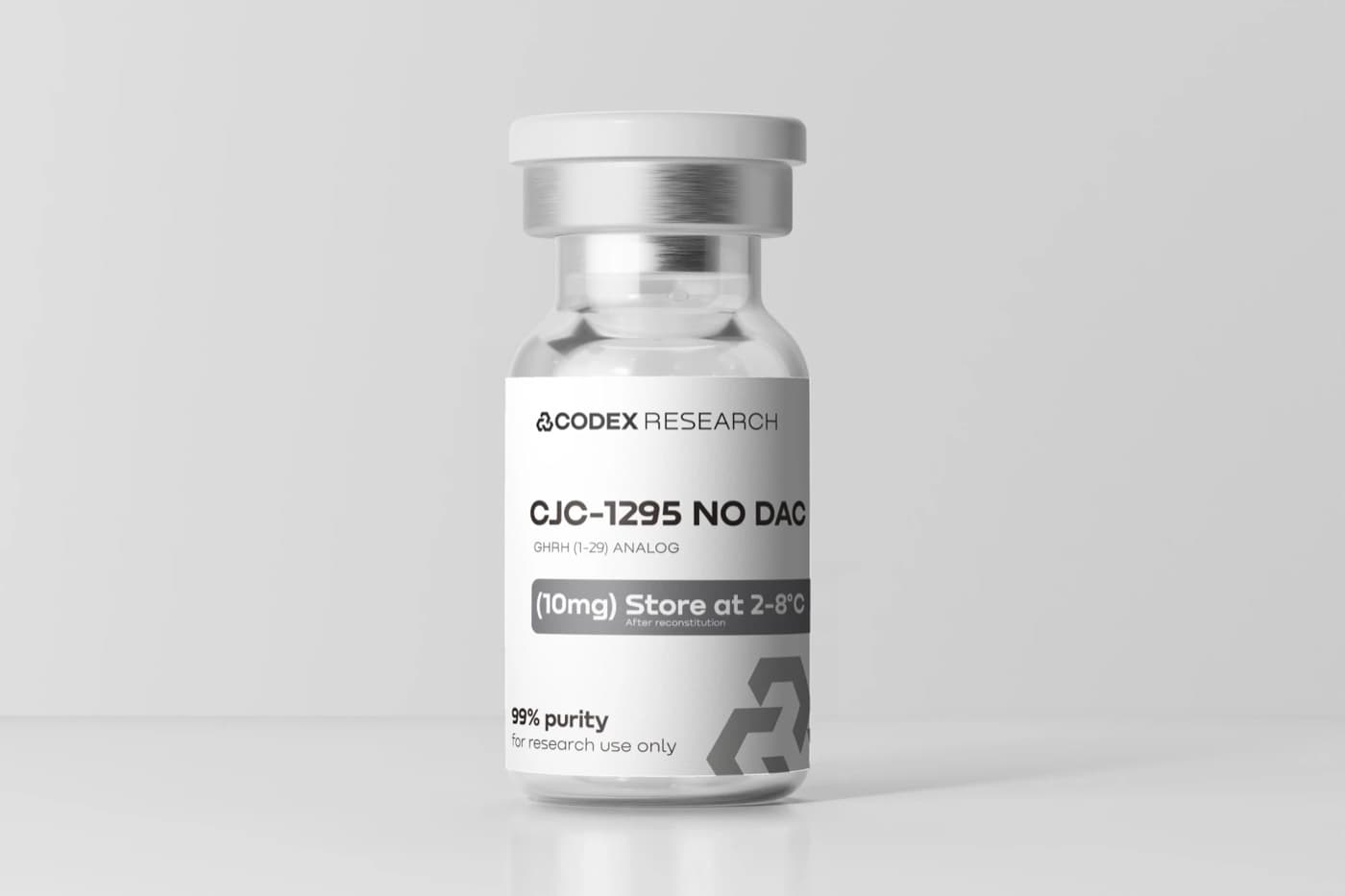
CJC-1295 is a synthetic analogue of growth hormone-releasing hormone designed to bind to albumin in the blood so it lasts for days. The short-acting "no DAC" version sold under the same name has no published human studies, and neither version is FDA-approved.
Not FDA-approved
WADA prohibited
Human trials
Also known as CJC-1295 with DAC, CJC-1295 without DAC, Modified GRF (1-29), Mod GRF 1-29
CJC-1295 was created by the Canadian company ConjuChem. It starts from the first 29 amino acids of human growth hormone-releasing hormone (GHRH), the part that carries its activity, with four amino acids swapped. ConjuChem then added an extra lysine carrying a chemical group that latches on to albumin, the most common protein in blood. Bound to albumin, the peptide stays in circulation for days instead of minutes (Jetté 2005). Sellers call this albumin-binding add-on "DAC".
The name is now used for two different molecules. CJC-1295 with DAC is the original compound: in healthy adults its half-life was about 6 to 8 days (Teichman 2006). CJC-1295 without DAC, also sold as "modified GRF (1-29)" or "mod GRF 1-29", is the 29-amino-acid peptide without the albumin-binding lysine, so it is expected to act for a much shorter time. A 2010 analysis of a seized product sold as CJC-1295 found a 29-amino-acid peptide, which fits the version without DAC (Henninge 2010). Every published human study we found used the version with DAC; we could not find any published human study of the version without it.
ConjuChem tested CJC-1295 in healthy volunteers in the mid-2000s and started a phase 2 trial in people with HIV and abdominal fat (NCT00267527). ClinicalTrials.gov lists that trial as terminated in 2006, and we could not find published results. The compound was not developed further and was never approved.
Type: synthetic GHRH analogue, 29 amino acids, with or without an albumin-binding group (DAC).
Studied for: long-lasting increases in growth hormone and IGF-1.
Strongest evidence: two small placebo-controlled dose studies and one hormone-pulse study in healthy adults, all with the DAC version.
Legal status: not approved as a medicine anywhere in the US; prohibited in sport by WADA.
02
CJC-1295 protocols and supplies
Schedules reported for this peptide, with the syringe measure for each step and the supplies each one takes. Reported use is not evidence that a schedule works or is safe, and none of this is medical advice.
No DAC, gradual, once daily
Subcutaneous injection, once a day
Community-reported
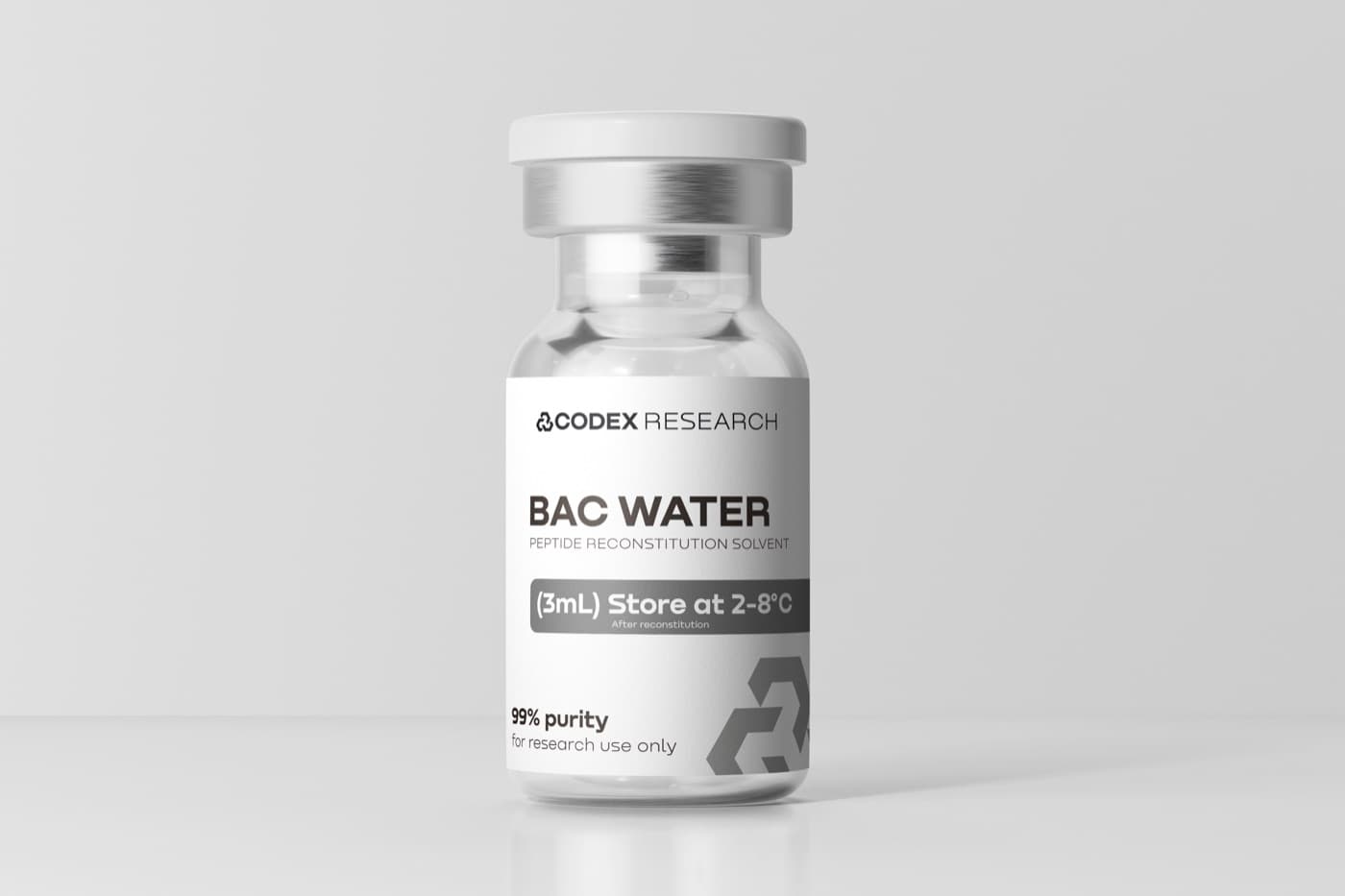
Reported in the research community. It has not been tested as a schedule in human trials. Worked out with a 10 mg vial + 3 mL bacteriostatic water (3.33 mg/mL, 33.3 mcg per unit).
Amounts as reported, with the syringe or spray measure for the vial below. Not a recommendation.
Period
Amount each time
U-100 units
Volume
Weeks 1-2
100 mcg
3
0.03 mL
Weeks 3-4
150 mcg
4.5
0.05 mL
Weeks 5-6
200 mcg
6
0.06 mL
Week 7 on
250-300 mcg
7.5-9
0.08-0.09 mL
Minimum supplies, worked out from the amounts above. Add a margin for losses.
Item
8 weeks
12 weeks
16 weeks
Injections
56
84
112
Total peptide
10.5 mg
18.9 mg
27.3 mg
CJC-1295 vials (10 mg)
2
2
3
Bacteriostatic water
6 mL
6 mL
9 mL
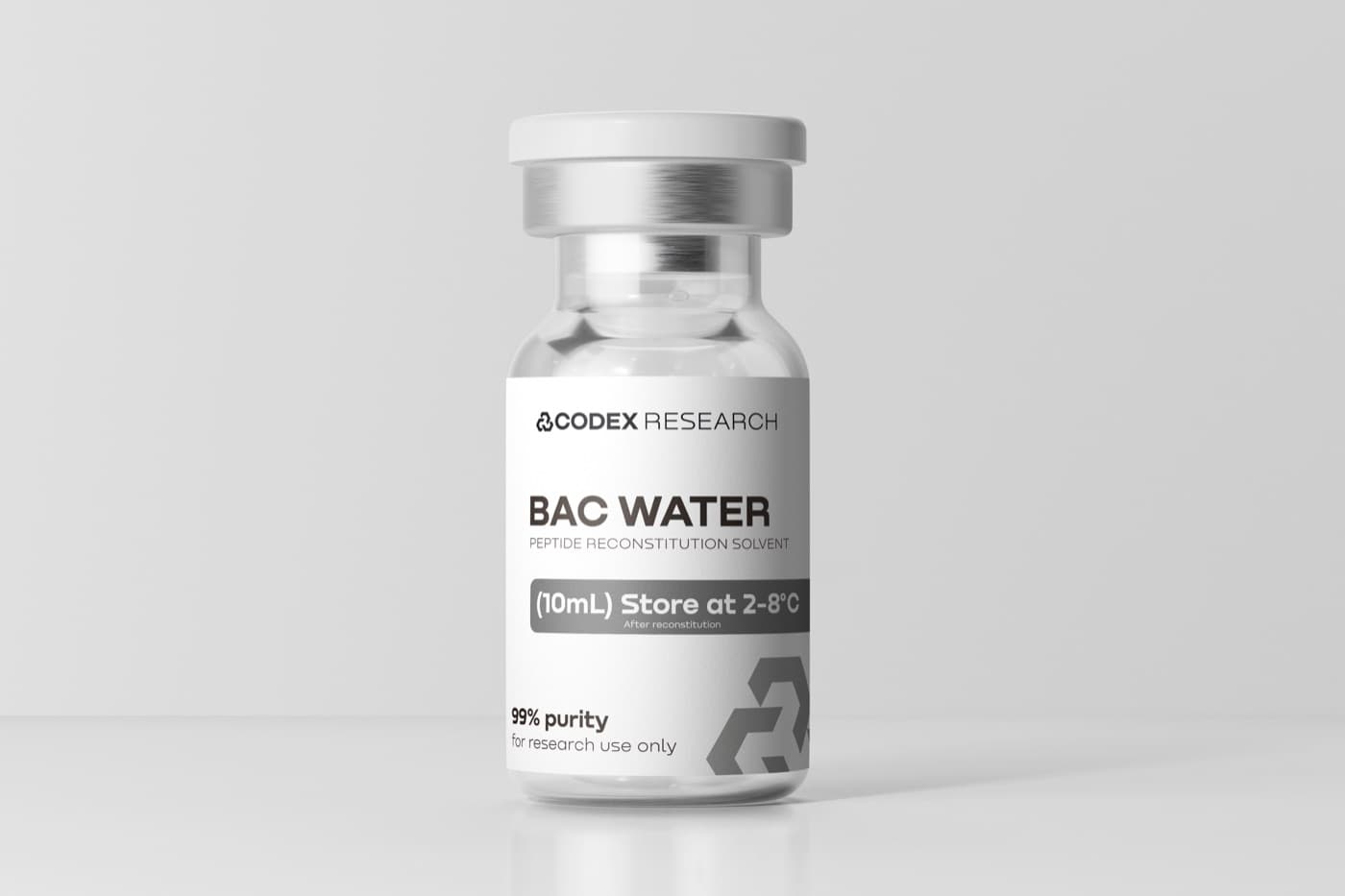
Water bottles (10 mL)
1
1
1
U-100 insulin syringes
56
84
112
Alcohol swabs (boxes of 100)
112 (2)
168 (2)
224 (3)
03
CJC-1295 doses used in studies
The dose each published study gave its participants, copied from the paper. Not dosing instructions; animal doses do not convert directly to people.
At a glance: 6 studies report a dose (3 in people, 3 in animals).
Doses used in human studies
Teichman SL 2006: Study 1: one of four ascending single doses. Study 2: two or three doses given weekly or every two weeks. The abstract names 30 and 60 µg/kg as the best tolerated; full dose levels are in the paper (Subcutaneous; 28 and 49 days)
Ionescu M 2006: 60 or 90 µg/kg, single injection (Subcutaneous, single injection; Measured before and 1 week after the injection)
Every study
Doses as reported by each study. Not a recommendation.
Study 1: one of four ascending single doses. Study 2: two or three doses given weekly or every two weeks. The abstract names 30 and 60 µg/kg as the best tolerated; full dose levels are in the paper.
Not applicable (laboratory analysis of a seized product)
—
04
Evidence at a glance
What has been studied, by type of evidence. A result in animals or cells is a reason to study something in people, not proof that it works in people.
In humans
Summarised
All the published human data are for CJC-1295 with DAC, in healthy adults:
Dose-finding trials: two randomised, placebo-controlled, double-blind trials gave single or repeated injections under the skin. One injection raised growth hormone 2- to 10-fold for 6 days or more and IGF-1 1.5- to 3-fold for 9 to 11 days. With repeated doses, IGF-1 stayed above baseline for up to 28 days. No serious adverse reactions were reported (Teichman 2006).
Hormone pulses: in healthy men aged 20 to 40, one injection of 60 or 90 µg/kg kept the natural on-off pattern of growth hormone release but raised the baseline between pulses 7.5-fold, mean growth hormone by 46% and IGF-1 by 45% one week later (Ionescu 2006).
Blood proteins: in 11 healthy young men, one week after an injection, several blood proteins changed and one correlated with IGF-1 levels. The authors studied them as possible markers of growth hormone activity (Sackmann-Sala 2009).
In short: the DAC version clearly raises growth hormone and IGF-1 for days to weeks in healthy adults, but these were small, short studies that measured hormone levels, not health outcomes. There are no published human data on the version without DAC, and the one patient trial was stopped without published results.
In animals
Summarised
Discovery in rats
ConjuChem made three albumin-binding versions of GRF (1-29). In rats, the best one, CJC-1295, gave four times more growth hormone over two hours than unmodified GRF (1-29) and was still found in plasma after 72 hours, bound to albumin (Jetté 2005).
Growth in GHRH-deficient mice
In mice born without GHRH, daily injections of CJC-1295 for 5 weeks gave normal body weight and length; dosing every 48 or 72 hours worked less well. The treated mice also had more growth hormone-producing cells in the pituitary (Alba 2006).
In cells (in vitro)
Nothing yet
No summary in our library yet. We only publish one after checking it against the original papers.
Proposed mechanisms from cell and animal studies. A plausible mechanism is not evidence of an effect in people.
CJC-1295 acts like the body's own GHRH, but for longer. The pathways come from rat, mouse and small human studies of the DAC version:
GHRH receptor in the pituitary: it is built from the active part of GHRH and released growth hormone from rat pituitary cells and in rats (Jetté 2005).
Albumin binding (DAC): the added group binds albumin in the blood, which extended its presence in rat plasma beyond 72 hours (Jetté 2005) and its half-life in people to about 6 to 8 days (Teichman 2006).
Higher baseline growth hormone: continuous stimulation mainly raised growth hormone levels between pulses, which the authors linked to the rise in IGF-1 (Ionescu 2006).
Pituitary cell growth: in mice it increased pituitary growth hormone mRNA and the number of growth hormone-producing cells (Alba 2006).
06
Reconstitution
How concentration changes with the amount of liquid added. A U-100 insulin syringe holds 1 mL in 100 units, so each unit is 0.01 mL. Step-by-step guide.
Step by step
Wash your hands and work on a clean, uncluttered surface. Let a refrigerated vial reach room temperature so the stopper is easier to pierce.
Wipe the rubber stopper of the peptide vial and of the bacteriostatic water with a fresh alcohol swab, and let them air-dry.
Draw the chosen volume of bacteriostatic water into a sterile syringe. With 2 mL, a 10 mg vial ends up at 5,000 mcg/mL, or 50 mcg per U-100 unit.
Insert the needle through the stopper and let the water run slowly down the inside wall of the vial, not straight onto the powder.
Swirl or roll the vial gently until the powder dissolves. Do not shake it: foaming can damage some peptides.
Check the solution against the light. It should be clear; cloudiness or particles mean something is wrong with the vial or the water.
Write the date and the volume of water on the label. Every unit calculation later depends on that volume.
Store the reconstituted CJC-1295 vial in the refrigerator, away from light.
Concentration by volume
A 10 mg vial: concentration after adding the liquid, and how much peptide each U-100 unit (0.01 mL) holds.
Arithmetic only. It assumes the vial holds exactly what the label says.
Concentration
5,000 mcg/mL
Per U-100 unit
50 mcg
Volume for your amount
—
07
Measuring with a U-100 syringe
What each mark on an insulin syringe holds once the vial is mixed. This is arithmetic, not a dose.
Reading a U-100 syringe: how much peptide each mark holds in a 10 mg vial mixed with 2 mL. Not a dose.
Syringe mark
Volume
Peptide in that volume
5 units
0.05 mL
250 mcg
10 units
0.1 mL
500 mcg
20 units
0.2 mL
1 mg
25 units
0.25 mL
1.25 mg
50 units
0.5 mL
2.5 mg
100 units
1 mL
5 mg
A U-100 insulin syringe holds 1 mL in 100 units, so each unit is 0.01 mL. The marks measure volume, not peptide.
Syringes come in 0.3 mL (30 units), 0.5 mL (50 units) and 1 mL (100 units) sizes. The smaller ones have finer marks and are easier to read for small volumes.
Read the volume at the top edge of the plunger's rubber seal, at eye level.
Tap out air bubbles before reading: a bubble takes up volume and makes the reading wrong.
Use a new sterile syringe and needle every time, and dispose of them in a sharps container.
08
Supplies
What reconstituting and measuring a vial takes.
The peptide vial, with its certificate of analysis (COA) for that batch. See how to read a COA.
Bacteriostatic water (water with 0.9% benzyl alcohol), which keeps a multi-use vial from growing bacteria. Sterile water has no preservative.
Sterile syringes to add the water, and U-100 insulin syringes to measure.
Alcohol swabs for the stoppers.
A sharps container for used needles.
A label or marker to write the date and the volume of water on the vial.
09
Side effects, safety and legal status
Human safety data come from small groups of healthy adults followed for up to about 7 weeks. No serious adverse reactions were reported, and the authors described doses of 30 or 60 µg/kg as relatively well tolerated (Teichman 2006). Long-term effects are unknown.
Two products, one name: the version with DAC lasts about a week in the body; the version without DAC is expected to last a much shorter time. A vial labelled only "CJC-1295" may contain either, so the exposure can differ greatly from what the buyer expects (Henninge 2010).
Long-lasting exposure: with a half-life of about a week, the effects of the DAC version cannot be stopped quickly if side effects appear.
Sustained IGF-1 rise: IGF-1 is a growth factor. The long-term effects of keeping it raised for weeks or months have not been studied for CJC-1295.
Pituitary changes: in mice, CJC-1295 increased the number of growth hormone-producing cells in the pituitary (Alba 2006). Whether this happens in people is unknown.
Product quality: products sold online are not checked by any regulator for identity, purity, dose or sterility.
Sport: growth hormone releasing factors, including CJC-1295, are on the WADA prohibited list at all times.
FDA
Not FDA-approved for any use.
WADA
Prohibited at all times (growth hormone releasing factors).
Status checked on
Oct 26, 2026
10
Storing CJC-1295
Before mixing
Freeze-dried (lyophilised) peptide is the most stable form. It is usually kept refrigerated, or frozen for long storage, sealed and away from light.
Heat, moisture and light speed up degradation. Keep the vial in its box and avoid leaving it in a car or by a window.
After mixing
Keep the reconstituted vial refrigerated and away from light. Do not freeze it again: freezing and thawing a solution can break the peptide down.
How long a mixed vial stays good depends on the peptide and the diluent, and for most research peptides there is no published stability data. Follow the supplier's guidance and discard any vial that turns cloudy.
Pierce the stopper as few times as possible, and always with a new sterile needle after wiping it with alcohol.
Write the volume of water on the label (for example "2 mL"). Without it, the unit calculations cannot be checked later.
11
Questions about CJC-1295
Is CJC-1295 FDA-approved?
Not FDA-approved for any use.
What doses of CJC-1295 have been studied?
Our library has 6 studies on CJC-1295. The doses each one used are in section 03, next to the study. They are not dosing instructions.
How much CJC-1295 is in each syringe unit?
It depends on how much liquid is added to the vial. For a 10 mg vial with 2 mL, each U-100 unit holds 50 mcg. The reconstitution table and calculator work it out for other volumes.
What is the difference between CJC-1295 with and without DAC?
Both start from the same modified 29-amino-acid fragment of GHRH. The version with DAC has an extra lysine carrying a group that binds to albumin in the blood, which gives it a half-life of about a week in people. The version without DAC, often sold as modified GRF (1-29), lacks that group and is expected to act for a much shorter time.
Which version was tested in humans?
Every published human study we found used the original version with DAC. We could not find any published human study of the version without DAC.
Was CJC-1295 ever tested in patients?
ConjuChem started a phase 2 trial in people with HIV and abdominal fat, but ClinicalTrials.gov lists it as terminated in 2006 and we could not find published results.
How much bacteriostatic water goes into a 10 mg CJC-1295 vial?
There is no single correct volume: it only changes the concentration. For a 10 mg vial, 1 mL gives 10,000 mcg/mL, 2 mL gives 5,000 mcg/mL, 3 mL gives 3,333 mcg/mL. More water makes small amounts easier to measure; less water keeps volumes small. Whatever volume is used, write it on the label.
What does one unit on an insulin syringe mean?
On a U-100 syringe, 100 units = 1 mL, so one unit is 0.01 mL. How much peptide that holds depends on the concentration of the vial, which depends on how much water was added.
Can doses from animal studies of CJC-1295 be converted to people?
No. Animal doses are reported per kilogram for a different species, and scaling them to people is not reliable. That is why Upzo shows each study dose next to its study, unconverted.
How should CJC-1295 be stored?
Unopened freeze-dried vials are usually kept refrigerated and away from light. Once mixed, keep the vial refrigerated and follow the supplier's guidance on how long it lasts.
12
References
Human growth hormone-releasing factor (hGRF)1-29-albumin bioconjugates activate the GRF receptor on the anterior pituitary in rats: identification of CJC-1295 as a long-lasting GRF analog. Jetté L, Léger R, Thibaudeau K, et al. Endocrinology. 2005;146:3052-3058. doi:10.1210/en.2004-1286
Prolonged stimulation of growth hormone (GH) and insulin-like growth factor I secretion by CJC-1295, a long-acting analog of GH-releasing hormone, in healthy adults. Teichman SL, Neale A, Lawrence B, et al. Journal of Clinical Endocrinology & Metabolism. 2006;91:799-805. doi:10.1210/jc.2005-1536
Pulsatile secretion of growth hormone (GH) persists during continuous stimulation by CJC-1295, a long-acting GH-releasing hormone analog. Ionescu M, Frohman LA Journal of Clinical Endocrinology & Metabolism. 2006;91:4792-4797. doi:10.1210/jc.2006-1702
Once-daily administration of CJC-1295, a long-acting growth hormone-releasing hormone (GHRH) analog, normalizes growth in the GHRH knockout mouse. Alba M, Fintini D, Sagazio A, et al. American Journal of Physiology-Endocrinology and Metabolism. 2006;291:E1290-E1294. doi:10.1152/ajpendo.00201.2006
Activation of the GH/IGF-1 axis by CJC-1295, a long-acting GHRH analog, results in serum protein profile changes in normal adult subjects. Sackmann-Sala L, Ding J, Frohman LA, et al. Growth Hormone & IGF Research. 2009;19:471-477. doi:10.1016/j.ghir.2009.03.001
Identification of CJC-1295, a growth-hormone-releasing peptide, in an unknown pharmaceutical preparation. Henninge J, Pepaj M, Hullstein I, et al. Drug Testing and Analysis. 2010;2:647-650. doi:10.1002/dta.233
Research supplier
For laboratory research use only.
Codex Research LabShips from Panama City · US domestic shipping
Research and education only. Not medical advice. Many peptides on this site are not approved by the FDA for human use. Doses shown are the ones used in published studies and are not a recommendation. Talk to a licensed clinician before using any of them. Read the full disclaimer.