Mitochondrial peptide

MOTS-c (10 mg vial) dosage protocol

Dosage chart, U-100 syringe units and supplies for a 10 mg vial of MOTS-c mixed with 3 mL. For the full research summary, see the MOTS-c page.

01

MOTS-c quick reference (10 mg vial)

Vial contents
10 mg MOTS-c
Final volume
3 mL
Concentration
3.33 mg/mL
One U-100 unit
33.3 mcg in 0.01 mL
02

MOTS-c dosage chart

Amounts as reported for this peptide, with the syringe measure for this vial. Reported use is not evidence that a schedule works or is safe, and none of this is medical advice.

Gradual, once daily

  • Subcutaneous injection, once a day
  • Community-reported

Reported in the research community. It has not been tested as a schedule in human trials. Worked out with a 10 mg vial + 3 mL bacteriostatic water (3.33 mg/mL, 33.3 mcg per unit).

Amounts as reported, with the syringe or spray measure for the vial below. Not a recommendation.
PeriodAmount each timeU-100 unitsVolume
Weeks 1-2200 mcg60.06 mL
Weeks 3-4400 mcg120.12 mL
Weeks 5-6600 mcg180.18 mL
Weeks 7-8800 mcg240.24 mL
Week 9 on1 mg300.3 mL

Reconstitution steps

  1. Draw 3 mL of bacteriostatic water with a sterile syringe.
  2. Inject it slowly down the inside wall of the vial, not onto the powder, to avoid foaming.
  3. Swirl or roll the vial gently until the powder dissolves. Do not shake it.
  4. Label it with the date and the volume of water, and refrigerate at 2-8 °C (36-46 °F), away from light.
03

Supplies needed

Minimum supplies for each length of the schedule above, with 10 mg vials and 3 mL of water per vial. One new syringe per injection (two if over 1 mL), two alcohol swabs per injection, 10 mL water bottles.

Gradual, once daily

  • Subcutaneous injection, once a day
  • Community-reported
Minimum supplies, worked out from the amounts above. Add a margin for losses.
Item8 weeks12 weeks16 weeks
Injections5684112
Total peptide28 mg56 mg84 mg
MOTS-c vials (10 mg)369
Bacteriostatic water9 mL18 mL27 mL
Water bottles (10 mL)123
U-100 insulin syringes5684112
Alcohol swabs (boxes of 100)112 (2)168 (2)224 (3)

Research supplier

For laboratory research use only.

Codex Research LabShips from Panama City · US domestic shipping

04

Peptide reconstitution

Try other volumes of water: the concentration and the units per amount change with it.

Reconstitution calculator

Arithmetic only. It assumes the vial holds exactly what the label says.

Concentration
3,333 mcg/mL
Per U-100 unit
33.33 mcg
Volume for your amount
—
Concentration of a 10 mg vial after adding the liquid, and peptide per U-100 unit (0.01 mL).
Liquid addedConcentrationPer unit
1 mL10,000 mcg/mL100 mcg
2 mL5,000 mcg/mL50 mcg
3 mL3,333 mcg/mL33.3 mcg
05

MOTS-c vial and research context

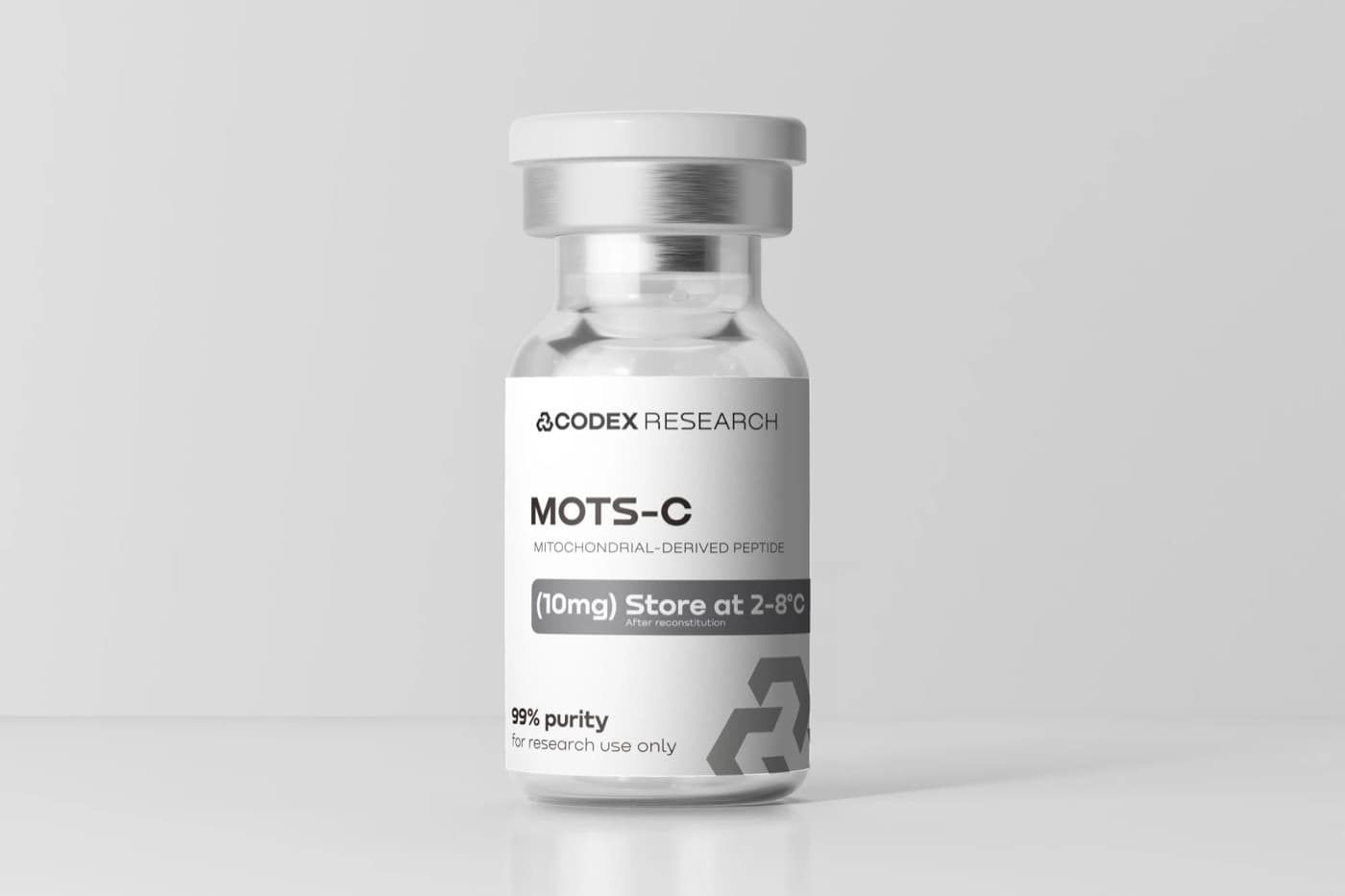
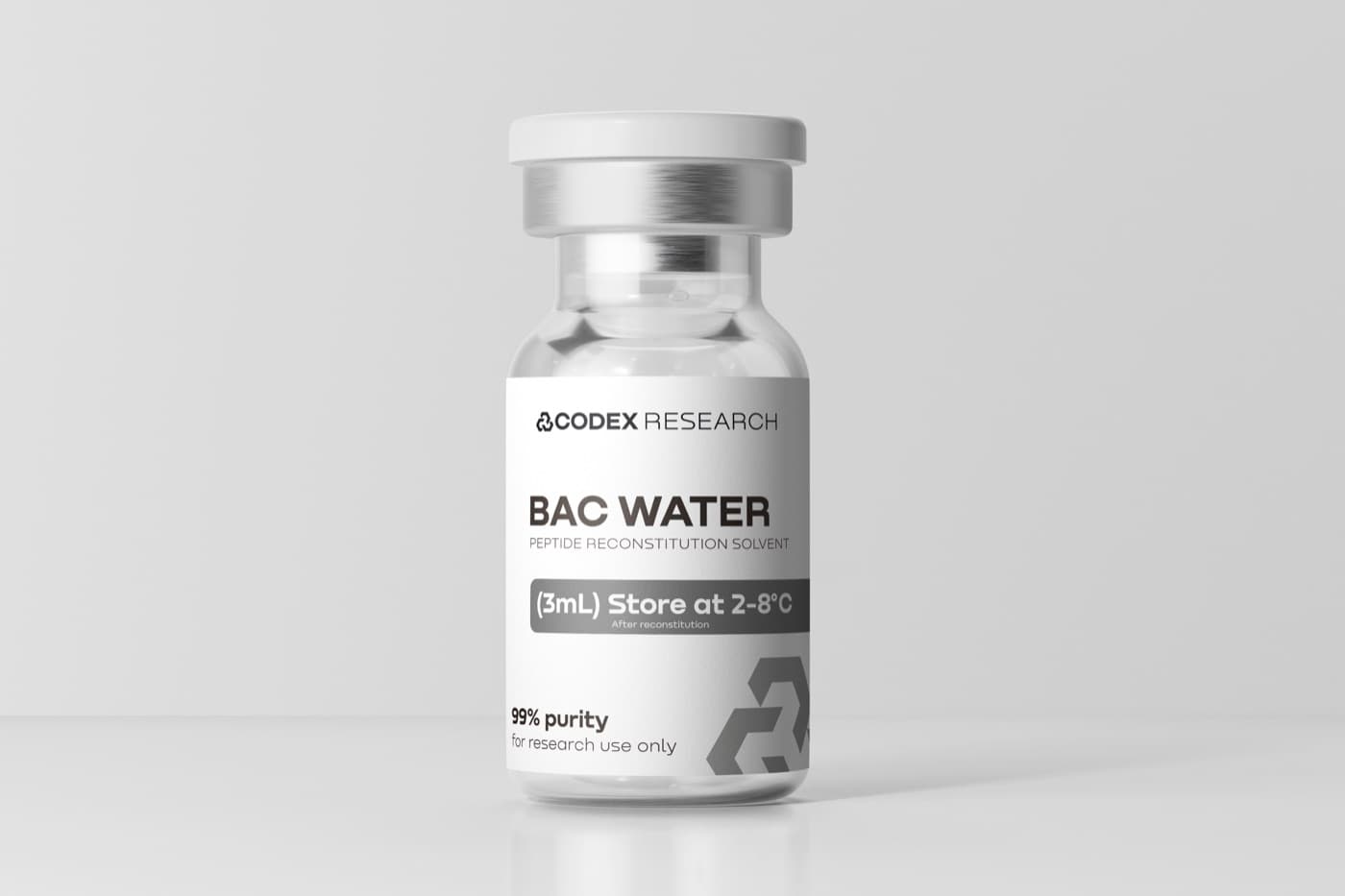
  • Reconstitute: add 3 mL of bacteriostatic water for a 3.33 mg/mL solution.
  • Amounts in the chart: 200 mcg-1 mg each time, by subcutaneous injection, once a day.
  • Easy measuring: at 3.33 mg/mL, one unit (0.01 mL) on a U-100 insulin syringe holds about 33.3 mcg.
  • Storage: freeze-dried, keep it sealed, cold and away from light (frozen for long storage). Once mixed, refrigerate at 2-8 °C and avoid freezing and thawing.

MOTS-c is a 16-amino-acid peptide encoded in mitochondrial DNA, studied in cells and mice for effects on metabolism and exercise capacity. Human data only measure the body's own levels; it has not been tested as a medicine in published trials, and it is not FDA-approved.

06

MOTS-c 10 mg protocol overview

  • Primary calculation: 10 mg made up to 3 mL equals 3.33 mg/mL.
  • Amounts shown: 200 mcg-1 mg per administration. Reported in the research community. It has not been tested as a schedule in human trials.
  • Route and frequency: subcutaneous injection, once a day.
  • Evidence ceiling: 4 of the 8 studies with a dose in our library were done in people.
  • Regulatory status: Not FDA-approved for any use. It was in Category 2 of FDA's compounding bulk substances list (possible significant safety risks); FDA's April 2026 update lists its nomination as withdrawn, which is not an approval.
07

How to read the MOTS-c dosage chart

A 10 mg vial holds 10,000 mcg of MOTS-c. Adding 3 mL gives 3.33 mg/mL, so one U-100 unit (0.01 mL) holds 33.3 mcg. To get the units for an amount, divide it by 33.3 mcg. The units are a volume mark on the syringe, not a measure of potency.

  • 200 mcg: 0.06 mL, or 6 U-100 units.
  • 400 mcg: 0.12 mL, or 12 U-100 units.
  • 600 mcg: 0.18 mL, or 18 U-100 units.
  • 800 mcg: 0.24 mL, or 24 U-100 units.
  • 1 mg: 0.3 mL, or 30 U-100 units.

Vial coverage by mass: 50 full amounts of 200 mcg, 25 full amounts of 400 mcg, 16 full amounts of 600 mcg, 12 full amounts of 800 mcg, 10 full amounts of 1 mg per vial, before any handling loss.

If a different volume of water is used, every unit figure changes: recalculate with the calculator above.
08

Human MOTS-c dosage evidence

No published trial has given MOTS-c to people. The human studies we found are observational: they measure the body's own MOTS-c.

  • Diabetes: in 225 adults in Qatar, blood MOTS-c was lower in people with type 2 diabetes and fell with higher HbA1c and age (Ramanjaneya 2019).
  • A gene variant: an East Asian variant that changes one amino acid of MOTS-c was linked to more type 2 diabetes in inactive men, across about 27,500 people in three cohorts (Zempo 2021).
  • Ageing: older men had lower blood MOTS-c but more MOTS-c in muscle than young men (D'Souza 2020).
  • Exercise: in a small human part of one study, exercise raised MOTS-c in muscle and blood (Reynolds 2021), while another found only a non-significant trend (von Walden 2021).

These studies suggest MOTS-c is linked to metabolism and exercise in people, but they cannot show cause and effect, and they say nothing about what happens when someone injects it. There is no human evidence on its effects or safety as a supplement.

Doses used in human studies

  • Zempo H 2021: No peptide given to people (genetic study). Mouse arm: 7.5 mg/kg twice daily by intraperitoneal injection for 21 days (from the full text)

Every study dose, including animal and cell studies, is in the MOTS-c dose table.

09

MOTS-c safety, side effects and evidence limits

Side effects and safety in people are unknown, because no published trial has given MOTS-c to humans. In its compounding review, FDA said products containing it may carry a risk of immune reactions and impurity problems, and that it had not identified any human exposure data.

  • Product quality: MOTS-c sold online is not checked by any regulator for identity, purity, dose or sterility.
  • Immune reactions: FDA noted a possible risk of immunogenicity (the body reacting against the peptide) for some routes of administration.
  • Unknown long-term effects: the animal studies lasted weeks to months, or used intermittent dosing in old mice. Effects of repeated use in people have not been studied.
  • Injection risks: any injected product that is not sterile can cause infection or abscesses.
  • FDA: Not FDA-approved for any use. It was in Category 2 of FDA's compounding bulk substances list (possible significant safety risks); FDA's April 2026 update lists its nomination as withdrawn, which is not an approval.
  • Evidence limits: reported use is not evidence that a schedule works or is safe. Animal doses do not convert to people, and research products are not made or checked for use in people.
  • Status checked on: Oct 26, 2026.
10

Questions about the MOTS-c 10 mg vial

How much bacteriostatic water goes into a 10 mg MOTS-c vial?

There is no single correct volume: it only changes the concentration. For a 10 mg vial, 1 mL gives 10,000 mcg/mL, 2 mL gives 5,000 mcg/mL, 3 mL gives 3,333 mcg/mL. More water makes small amounts easier to measure; less water keeps volumes small. Whatever volume is used, write it on the label.

What does one unit on an insulin syringe mean?

On a U-100 syringe, 100 units = 1 mL, so one unit is 0.01 mL. How much peptide that holds depends on the concentration of the vial, which depends on how much water was added.

Can doses from animal studies of MOTS-c be converted to people?

No. Animal doses are reported per kilogram for a different species, and scaling them to people is not reliable. That is why Upzo shows each study dose next to its study, unconverted.

Research and education only. Not medical advice. Many peptides on this site are not approved by the FDA for human use. Doses shown are the ones used in published studies and are not a recommendation. Talk to a licensed clinician before using any of them. Read the full disclaimer.