Tissue repair

TB-500 (10 mg vial) dosage protocol

Dosage chart, U-100 syringe units and supplies for a 10 mg vial of TB-500 mixed with 3 mL. For the full research summary, see the TB-500 page.

01

TB-500 quick reference (10 mg vial)

Vial contents
10 mg TB-500
Final volume
3 mL
Concentration
3.33 mg/mL
One U-100 unit
33.3 mcg in 0.01 mL
02

TB-500 dosage chart

Amounts as reported for this peptide, with the syringe measure for this vial. Reported use is not evidence that a schedule works or is safe, and none of this is medical advice.

Gradual, once daily

  • Subcutaneous injection, once a day
  • Community-reported

Reported in the research community. It has not been tested as a schedule in human trials. Worked out with a 10 mg vial + 3 mL bacteriostatic water (3.33 mg/mL, 33.3 mcg per unit).

Amounts as reported, with the syringe or spray measure for the vial below. Not a recommendation.
PeriodAmount each timeU-100 unitsVolume
Weeks 1-2500 mcg150.15 mL
Weeks 3-4600 mcg180.18 mL
Weeks 5-8750 mcg22.50.22 mL
Week 9 on1 mg300.3 mL

Reconstitution steps

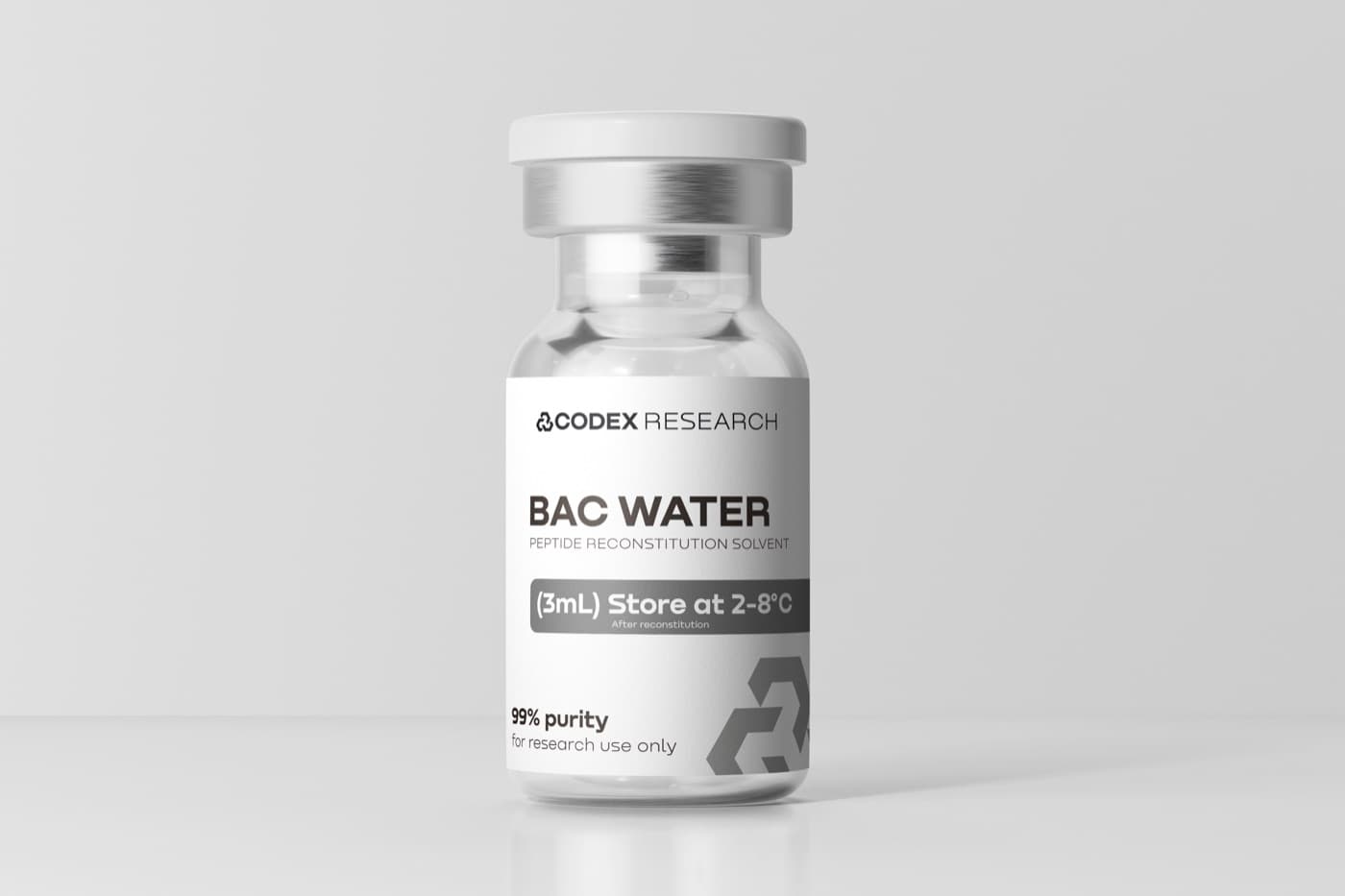
  1. Draw 3 mL of bacteriostatic water with a sterile syringe.
  2. Inject it slowly down the inside wall of the vial, not onto the powder, to avoid foaming.
  3. Swirl or roll the vial gently until the powder dissolves. Do not shake it.
  4. Label it with the date and the volume of water, and refrigerate at 2-8 °C (36-46 °F), away from light.
03

Supplies needed

Minimum supplies for each length of the schedule above, with 10 mg vials and 3 mL of water per vial. One new syringe per injection (two if over 1 mL), two alcohol swabs per injection, 10 mL water bottles.

Gradual, once daily

  • Subcutaneous injection, once a day
  • Community-reported
Minimum supplies, worked out from the amounts above. Add a margin for losses.
Item8 weeks12 weeks16 weeks
Injections5684112
Total peptide36.4 mg64.4 mg92.4 mg
TB-500 vials (10 mg)4710
Bacteriostatic water12 mL21 mL30 mL
Water bottles (10 mL)233
U-100 insulin syringes5684112
Alcohol swabs (boxes of 100)112 (2)168 (2)224 (3)

Research supplier

For laboratory research use only.

Codex Research LabShips from Panama City · US domestic shipping

04

Peptide reconstitution

Try other volumes of water: the concentration and the units per amount change with it.

Reconstitution calculator

Arithmetic only. It assumes the vial holds exactly what the label says.

Concentration
3,333 mcg/mL
Per U-100 unit
33.33 mcg
Volume for your amount
—
Concentration of a 10 mg vial after adding the liquid, and peptide per U-100 unit (0.01 mL).
Liquid addedConcentrationPer unit
1 mL10,000 mcg/mL100 mcg
2 mL5,000 mcg/mL50 mcg
3 mL3,333 mcg/mL33.3 mcg
05

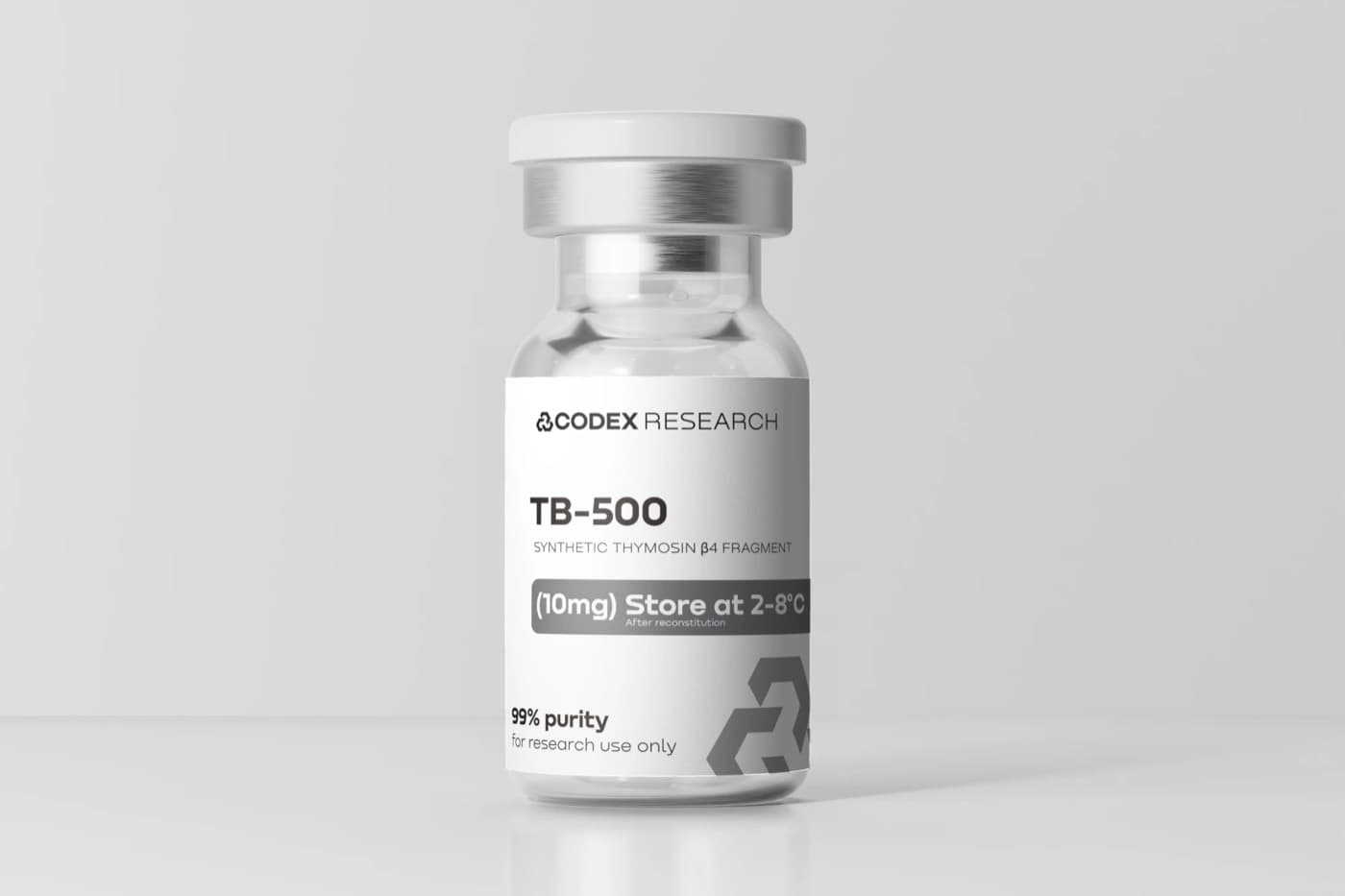
TB-500 vial and research context

  • Reconstitute: add 3 mL of bacteriostatic water for a 3.33 mg/mL solution.
  • Amounts in the chart: 500 mcg-1 mg each time, by subcutaneous injection, once a day.
  • Easy measuring: at 3.33 mg/mL, one unit (0.01 mL) on a U-100 insulin syringe holds about 33.3 mcg.
  • Storage: freeze-dried, keep it sealed, cold and away from light (frozen for long storage). Once mixed, refrigerate at 2-8 °C and avoid freezing and thawing.

TB-500 is a synthetic seven-amino-acid peptide copied from the actin-binding region of thymosin beta-4, a natural protein involved in cell movement and repair. Almost all of the research cited for it was done on the full thymosin beta-4 protein, not on TB-500, and it is not FDA-approved.

06

TB-500 10 mg protocol overview

  • Primary calculation: 10 mg made up to 3 mL equals 3.33 mg/mL.
  • Amounts shown: 500 mcg-1 mg per administration. Reported in the research community. It has not been tested as a schedule in human trials.
  • Route and frequency: subcutaneous injection, once a day.
  • Evidence ceiling: 5 of the 12 studies with a dose in our library were done in people.
  • Regulatory status: Not FDA-approved for any use. WADA: Prohibited at all times (thymosin beta-4 and its derivatives).
07

How to read the TB-500 dosage chart

A 10 mg vial holds 10,000 mcg of TB-500. Adding 3 mL gives 3.33 mg/mL, so one U-100 unit (0.01 mL) holds 33.3 mcg. To get the units for an amount, divide it by 33.3 mcg. The units are a volume mark on the syringe, not a measure of potency.

  • 500 mcg: 0.15 mL, or 15 U-100 units.
  • 600 mcg: 0.18 mL, or 18 U-100 units.
  • 750 mcg: 0.22 mL, or 22.5 U-100 units.
  • 1 mg: 0.3 mL, or 30 U-100 units.

Vial coverage by mass: 20 full amounts of 500 mcg, 16 full amounts of 600 mcg, 13 full amounts of 750 mcg, 10 full amounts of 1 mg per vial, before any handling loss.

If a different volume of water is used, every unit figure changes: recalculate with the calculator above.

08

Human TB-500 dosage evidence

We could not find any published human study of TB-500 (the fragment). The human data below are all on the full thymosin beta-4 protein, and they cannot be assumed to apply to TB-500:

  • Intravenous safety (full Tβ4): 40 healthy volunteers in four dose groups received synthetic Tβ4 or placebo, first as one dose and then daily for 14 days. Adverse events were infrequent and mild or moderate, with no serious events (Ruff 2010). A Chinese phase 1 trial of a recombinant version reported similar tolerability in healthy adults (Wang 2021).
  • Dry eye (full Tβ4 eye drops, RGN-259): in a nine-patient randomised trial, the Tβ4 group had less discomfort and corneal staining than the vehicle group (Sosne 2015). In a larger 72-person trial, both main endpoints were missed, although some secondary measures improved (Sosne and Ousler 2015).
  • Venous leg ulcers (full Tβ4 gel): a phase 2 trial in 73 patients found the gel was tolerated about as well as placebo; the authors suggested one concentration might speed healing, but the abstract gives no clear comparison with placebo (Guarnera 2010).

Verdict: for TB-500 itself there is no human evidence of benefit or safety. For full Tβ4, small early trials suggest it was tolerated in the short term, with mixed signals of benefit in the eye and skin. A short fragment is a different molecule, and results from the whole protein should not be transferred to it.

Doses used in human studies

  • Ruff D 2010: Full synthetic thymosin beta-4 (not TB-500): 42, 140, 420 or 1260 mg, once and then daily (Intravenous; Single dose, then 14 days of daily doses)
  • Wang X 2021: Recombinant full thymosin beta-4 (NL005, not TB-500): single doses of 0.05 to 25.0 µg/kg; multiple doses of 0.5, 2.0 or 5.0 µg/kg daily (Intravenous; Single dose or 10 days, with 28 days of follow-up)
  • Guarnera G 2010: Full thymosin beta-4 (not TB-500) in escalating concentrations; the abstract names 0.03% as the most promising. Other concentrations not given in the abstract; see the paper (Topical)
  • Sosne G 2015: RGN-259 (full thymosin beta-4, not TB-500) 0.1%, 6 times daily (Eye drops; 28 days, plus 28 days of follow-up)
  • Sosne G 2015: RGN-259 (full thymosin beta-4, not TB-500) 0.1%; frequency not given in the abstract (Eye drops; 28 days)

Every study dose, including animal and cell studies, is in the TB-500 dose table.

09

TB-500 safety, side effects and evidence limits

There are no human safety data for TB-500. Short-term trials of the full Tβ4 protein reported mostly mild side effects (Ruff 2010; Wang 2021), but those used regulated, pharmaceutical-grade products, not the fragment sold online. A 2026 sports-medicine review groups TB-500 with other unapproved peptides for which rigorous human safety data are scarce (Mendias 2026).

  • Product quality: TB-500 sold online is not checked by any regulator for identity, purity, dose or sterility. What is in the vial may not match the label.
  • Fragment versus protein: results and safety data for full Tβ4 do not transfer automatically to a seven-amino-acid fragment.
  • Blood vessel growth: full Tβ4 has been linked to new blood vessel growth in animals. Tumours also rely on new vessels, so this is a theoretical concern for anyone with cancer or a history of it. It has not been studied for TB-500.
  • Injection risks: any injected product that is not sterile can cause infection or abscesses.
  • Sport: thymosin beta-4 and its derivatives, including TB-500, are prohibited at all times by WADA, and labs can detect the fragment and its breakdown products (Ho 2012; Esposito 2012).
  • FDA: Not FDA-approved for any use.
  • WADA: Prohibited at all times (thymosin beta-4 and its derivatives).
  • Evidence limits: reported use is not evidence that a schedule works or is safe. Animal doses do not convert to people, and research products are not made or checked for use in people.
  • Status checked on: Oct 26, 2026.
10

Questions about the TB-500 10 mg vial

How much bacteriostatic water goes into a 10 mg TB-500 vial?

There is no single correct volume: it only changes the concentration. For a 10 mg vial, 1 mL gives 10,000 mcg/mL, 2 mL gives 5,000 mcg/mL, 3 mL gives 3,333 mcg/mL. More water makes small amounts easier to measure; less water keeps volumes small. Whatever volume is used, write it on the label.

What does one unit on an insulin syringe mean?

On a U-100 syringe, 100 units = 1 mL, so one unit is 0.01 mL. How much peptide that holds depends on the concentration of the vial, which depends on how much water was added.

Can doses from animal studies of TB-500 be converted to people?

No. Animal doses are reported per kilogram for a different species, and scaling them to people is not reliable. That is why Upzo shows each study dose next to its study, unconverted.

Research and education only. Not medical advice. Many peptides on this site are not approved by the FDA for human use. Doses shown are the ones used in published studies and are not a recommendation. Talk to a licensed clinician before using any of them. Read the full disclaimer.