Gradual, once daily
- Subcutaneous injection, once a day
- Community-reported
| Period | Amount each time | U-100 units | Volume |
|---|---|---|---|
| Week 1 | 50 mg | 15 | 0.15 mL |
| Week 2 | 75 mg | 22.5 | 0.23 mL |
| Week 3 on | 100 mg | 30 | 0.3 mL |
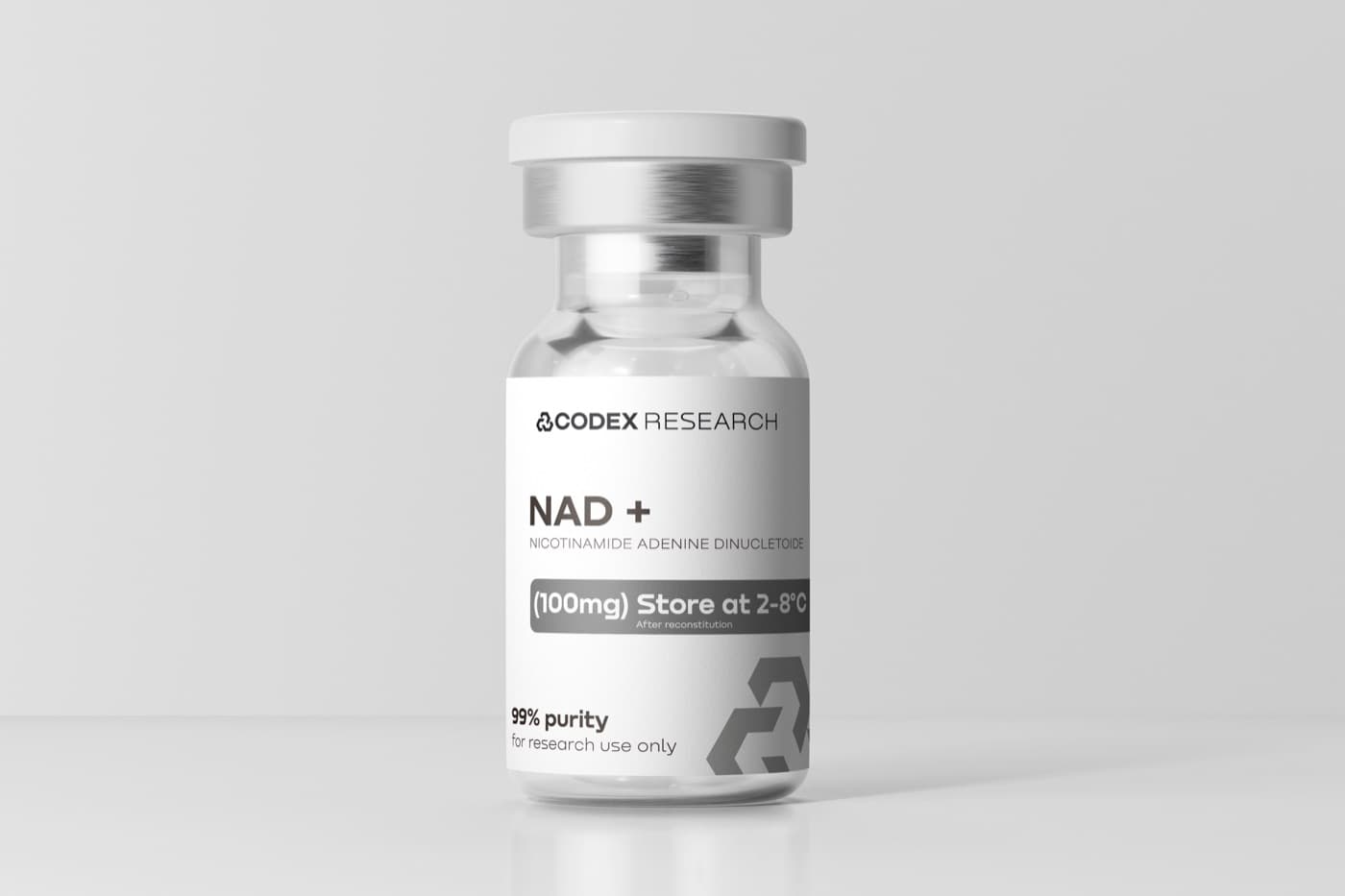
Dosage chart, U-100 syringe units and supplies for a 1,000 mg vial of NAD+ mixed with 3 mL. For the full research summary, see the NAD+ page.
Amounts as reported for this peptide, with the syringe measure for this vial. Reported use is not evidence that a schedule works or is safe, and none of this is medical advice.
| Period | Amount each time | U-100 units | Volume |
|---|---|---|---|
| Week 1 | 50 mg | 15 | 0.15 mL |
| Week 2 | 75 mg | 22.5 | 0.23 mL |
| Week 3 on | 100 mg | 30 | 0.3 mL |
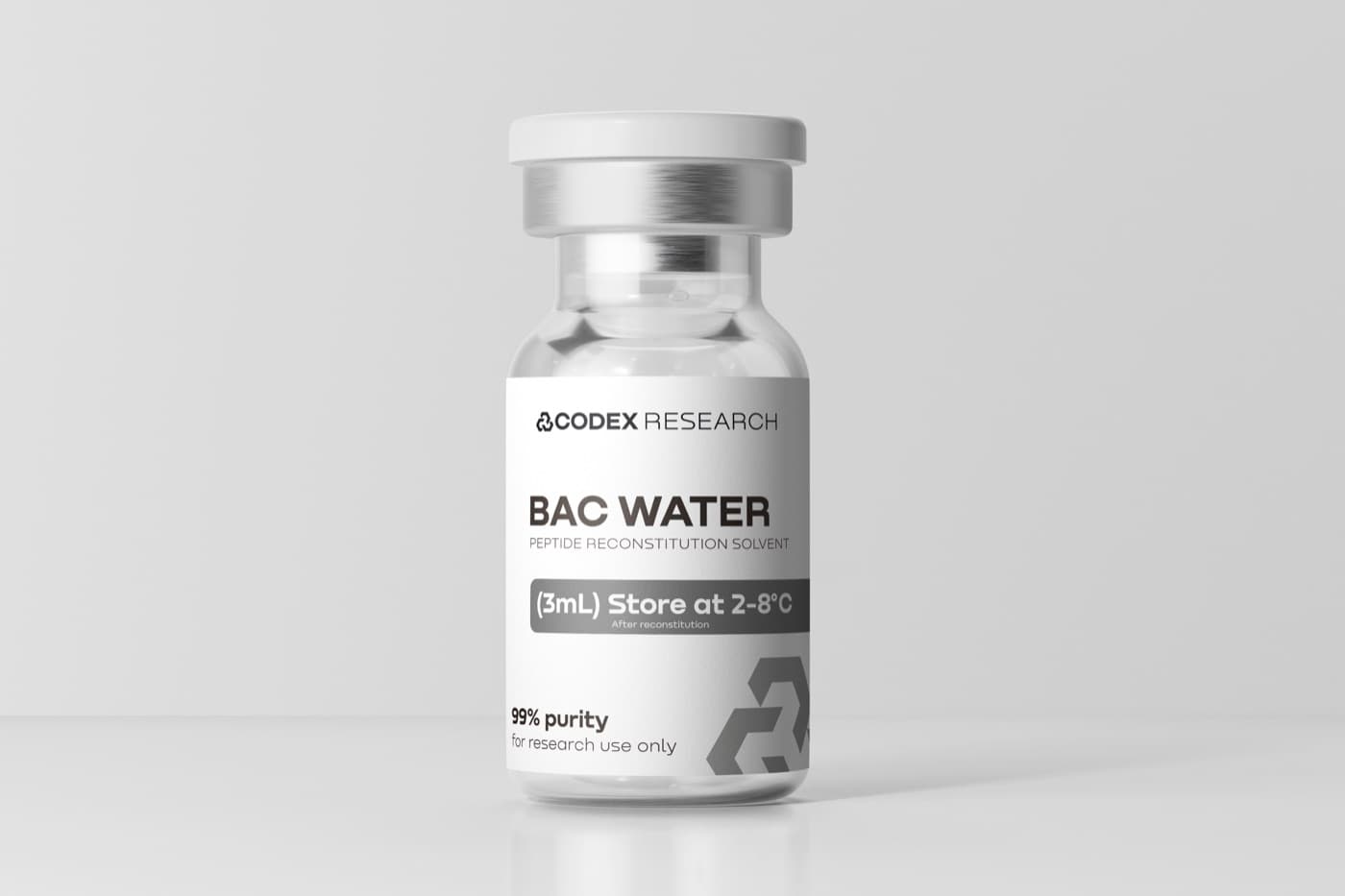
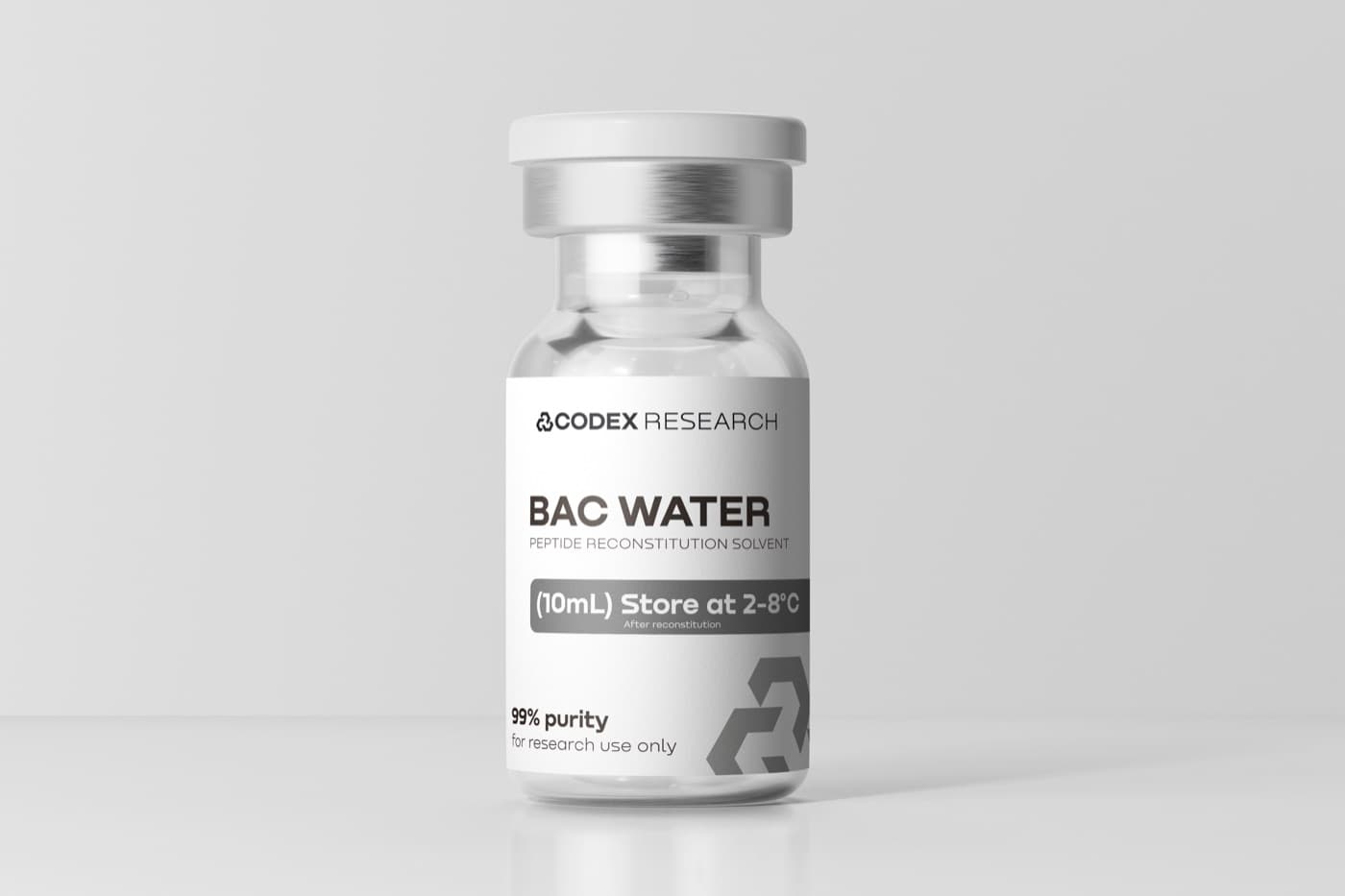
Minimum supplies for each length of the schedule above, with 1,000 mg vials and 3 mL of water per vial. One new syringe per injection (two if over 1 mL), two alcohol swabs per injection, 10 mL water bottles.
| Item | 8 weeks | 12 weeks | 16 weeks |
|---|---|---|---|
| Injections | 56 | 84 | 112 |
| Total peptide | 5,075 mg | 7,875 mg | 10,675 mg |
| NAD+ vials (1,000 mg) | 6 | 8 | 11 |
| Bacteriostatic water | 18 mL | 24 mL | 33 mL |
| Water bottles (10 mL) | 2 | 3 | 4 |
| U-100 insulin syringes | 56 | 84 | 112 |
| Alcohol swabs (boxes of 100) | 112 (2) | 168 (2) | 224 (3) |
For laboratory research use only.
Codex Research LabShips from Panama City · US domestic shipping
Try other volumes of water: the concentration and the units per amount change with it.
Arithmetic only. It assumes the vial holds exactly what the label says.
| Liquid added | Concentration | Per unit |
|---|---|---|
| 1 mL | 1,000,000 mcg/mL | 10 mg |
| 2 mL | 500,000 mcg/mL | 5 mg |
| 3 mL | 333,333 mcg/mL | 3.33 mg |
NAD+ is a coenzyme found in every cell and used in energy metabolism; it is not a peptide, but it is sold alongside them, often as an injection or IV drip. Almost all human trials use oral precursors (NR or NMN) rather than NAD+ itself, and injectable NAD+ is not FDA-approved.
A 1,000 mg vial holds 1,000,000 mcg of NAD+. Adding 3 mL gives 333 mg/mL, so one U-100 unit (0.01 mL) holds 3.33 mg. To get the units for an amount, divide it by 3.33 mg. The units are a volume mark on the syringe, not a measure of potency.
Vial coverage by mass: 20 full amounts of 50 mg, 13 full amounts of 75 mg, 10 full amounts of 100 mg per vial, before any handling loss.
If a different volume of water is used, every unit figure changes: recalculate with the calculator above.
Verdict: oral precursors reliably raise NAD-related levels and were well tolerated in trials lasting weeks to months, but effects on health outcomes are inconsistent. For injected or infused NAD+, there are no controlled outcome trials, and the little data available point to poor tolerability when given quickly.
Every study dose, including animal and cell studies, is in the NAD+ dose table.
For oral NR and NMN, trials of weeks to months reported good tolerability (Dollerup 2018; Gallagher 2026). For IV NAD+, the available reports describe uncomfortable symptoms during infusion, and there are no long-term safety data.
There is no single correct volume: it only changes the concentration. For a 1,000 mg vial, 1 mL gives 1,000,000 mcg/mL, 2 mL gives 500,000 mcg/mL, 3 mL gives 333,333 mcg/mL. More water makes small amounts easier to measure; less water keeps volumes small. Whatever volume is used, write it on the label.
On a U-100 syringe, 100 units = 1 mL, so one unit is 0.01 mL. How much peptide that holds depends on the concentration of the vial, which depends on how much water was added.
No. Animal doses are reported per kilogram for a different species, and scaling them to people is not reliable. That is why Upzo shows each study dose next to its study, unconverted.
Research and education only. Not medical advice. Many peptides on this site are not approved by the FDA for human use. Doses shown are the ones used in published studies and are not a recommendation. Talk to a licensed clinician before using any of them. Read the full disclaimer.