Incretin (GLP-1 family)

Tirzepatide (20 mg vial) dosage protocol

Dosage chart, U-100 syringe units and supplies for a 20 mg vial of Tirzepatide mixed with 2 mL. For the full research summary, see the Tirzepatide page.

01

Tirzepatide quick reference (20 mg vial)

Vial contents
20 mg Tirzepatide
Final volume
2 mL
Concentration
10 mg/mL
One U-100 unit
100 mcg in 0.01 mL
02

Tirzepatide dosage chart

Amounts as reported for this peptide, with the syringe measure for this vial. Reported use is not evidence that a schedule works or is safe, and none of this is medical advice.

Once-weekly escalation

  • Subcutaneous injection, once a week
  • From the FDA label

The escalation in the FDA label of the approved drug, worked out for a research vial. Worked out with a 20 mg vial + 2 mL bacteriostatic water (10 mg/mL, 100 mcg per unit).

Amounts as reported, with the syringe or spray measure for the vial below. Not a recommendation.
PeriodAmount each timeU-100 unitsVolume
Weeks 1-42.5 mg250.25 mL
Weeks 5-85 mg500.5 mL
Weeks 9-127.5 mg750.75 mL
Weeks 13-1610 mg1001 mL
Weeks 17-2012.5 mg2 injections of 62.5 units1.25 mL
Week 21 on15 mg2 injections of 75 units1.5 mL

Reconstitution steps

  1. Draw 2 mL of bacteriostatic water with a sterile syringe.
  2. Inject it slowly down the inside wall of the vial, not onto the powder, to avoid foaming.
  3. Swirl or roll the vial gently until the powder dissolves. Do not shake it.
  4. Label it with the date and the volume of water, and refrigerate at 2-8 °C (36-46 °F), away from light.
03

Supplies needed

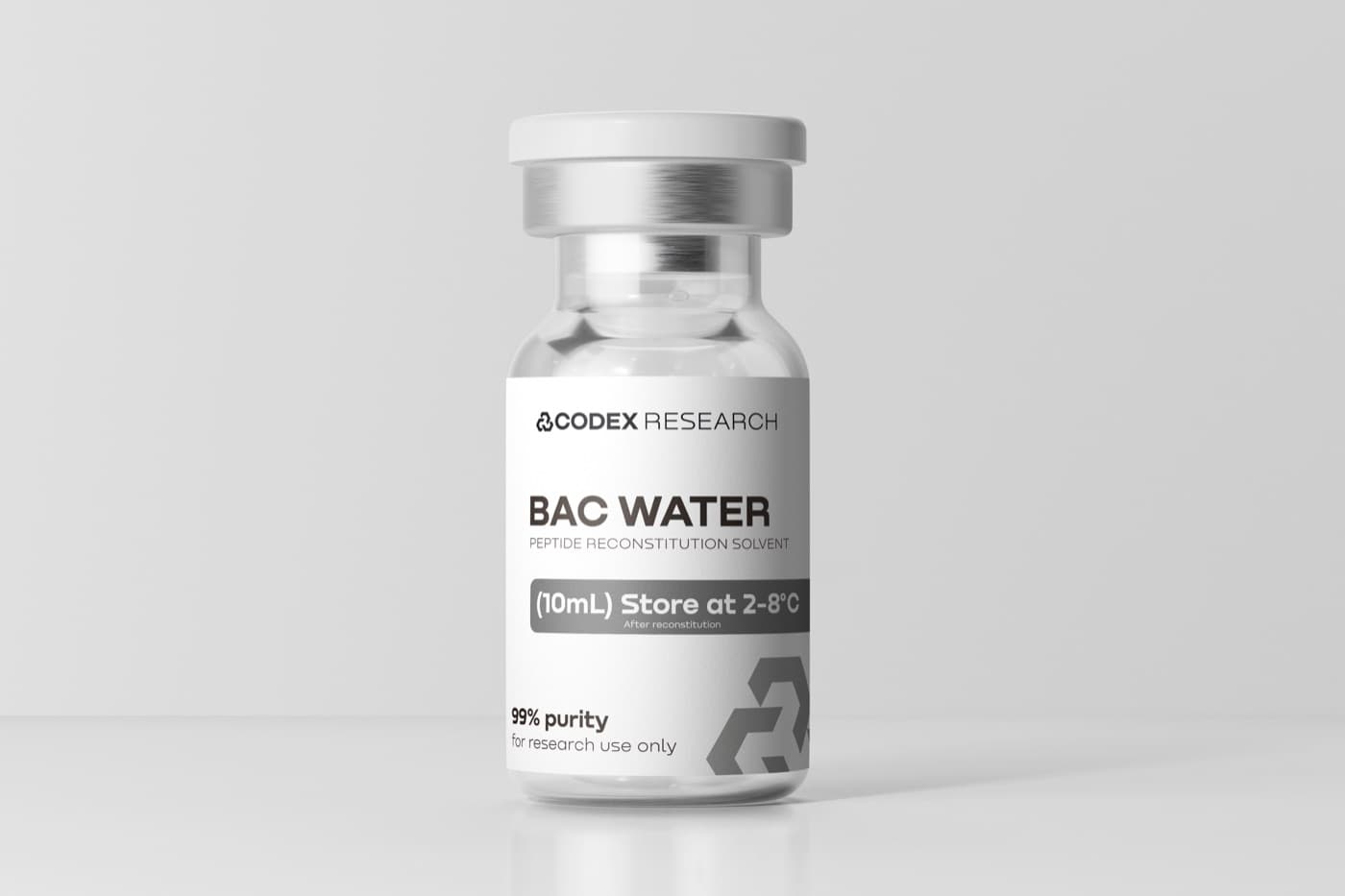
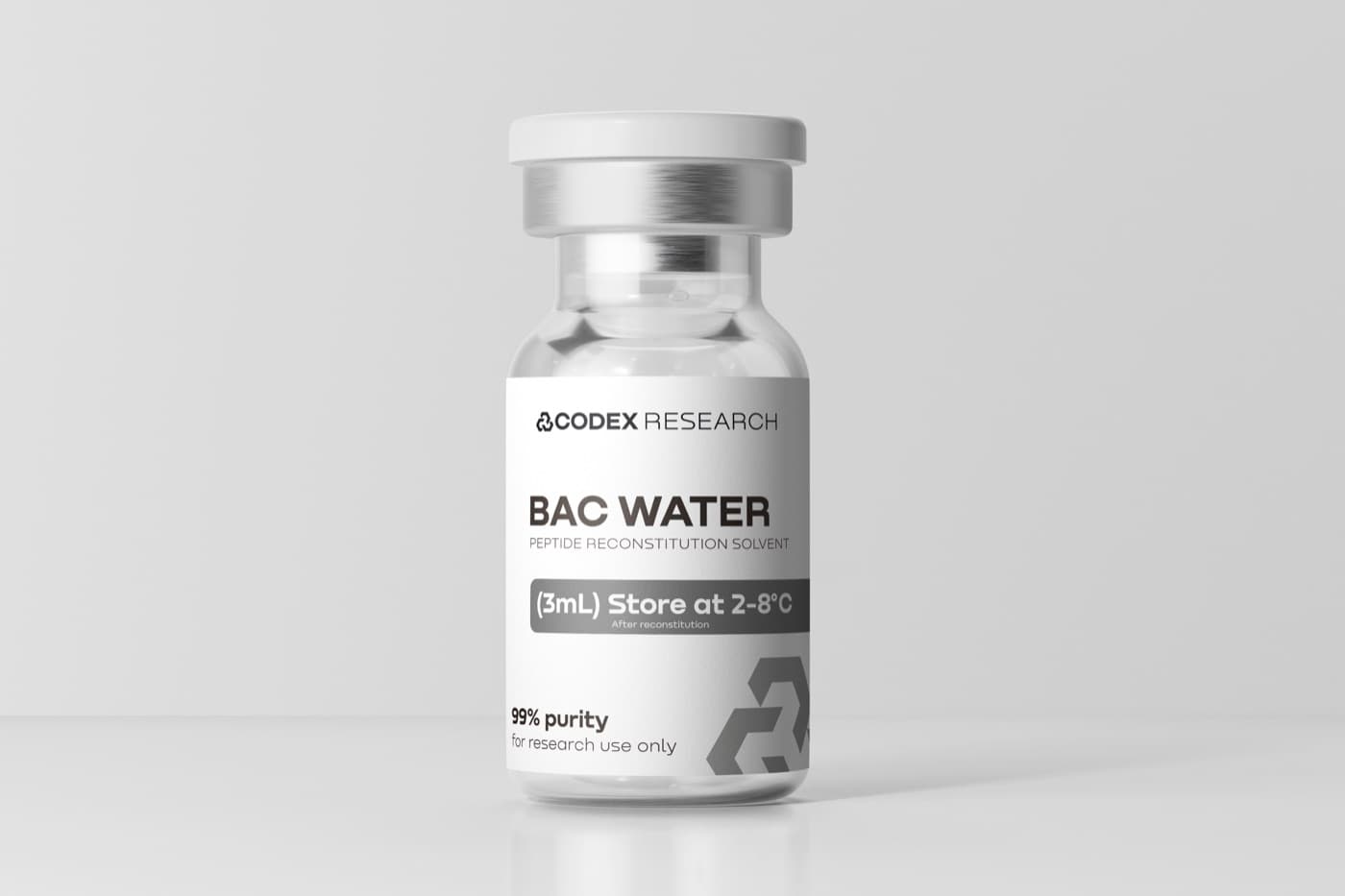
Minimum supplies for each length of the schedule above, with 20 mg vials and 2 mL of water per vial. One new syringe per injection (two if over 1 mL), two alcohol swabs per injection, 10 mL water bottles.

Once-weekly escalation

  • Subcutaneous injection, once a week
  • From the FDA label
Minimum supplies, worked out from the amounts above. Add a margin for losses.
Item12 weeks24 weeks
Injections1224
Total peptide60 mg210 mg
Tirzepatide vials (20 mg)311
Bacteriostatic water6 mL22 mL
Water bottles (10 mL)13
U-100 insulin syringes1232
Alcohol swabs (boxes of 100)24 (1)64 (1)

Research supplier

For laboratory research use only.

Codex Research LabShips from Panama City · US domestic shipping

04

Peptide reconstitution

Try other volumes of water: the concentration and the units per amount change with it.

Reconstitution calculator

Arithmetic only. It assumes the vial holds exactly what the label says.

Concentration
10,000 mcg/mL
Per U-100 unit
100 mcg
Volume for your amount
—
Concentration of a 20 mg vial after adding the liquid, and peptide per U-100 unit (0.01 mL).
Liquid addedConcentrationPer unit
1 mL20,000 mcg/mL200 mcg
2 mL10,000 mcg/mL100 mcg
3 mL6,667 mcg/mL66.7 mcg
05

Tirzepatide vial and research context

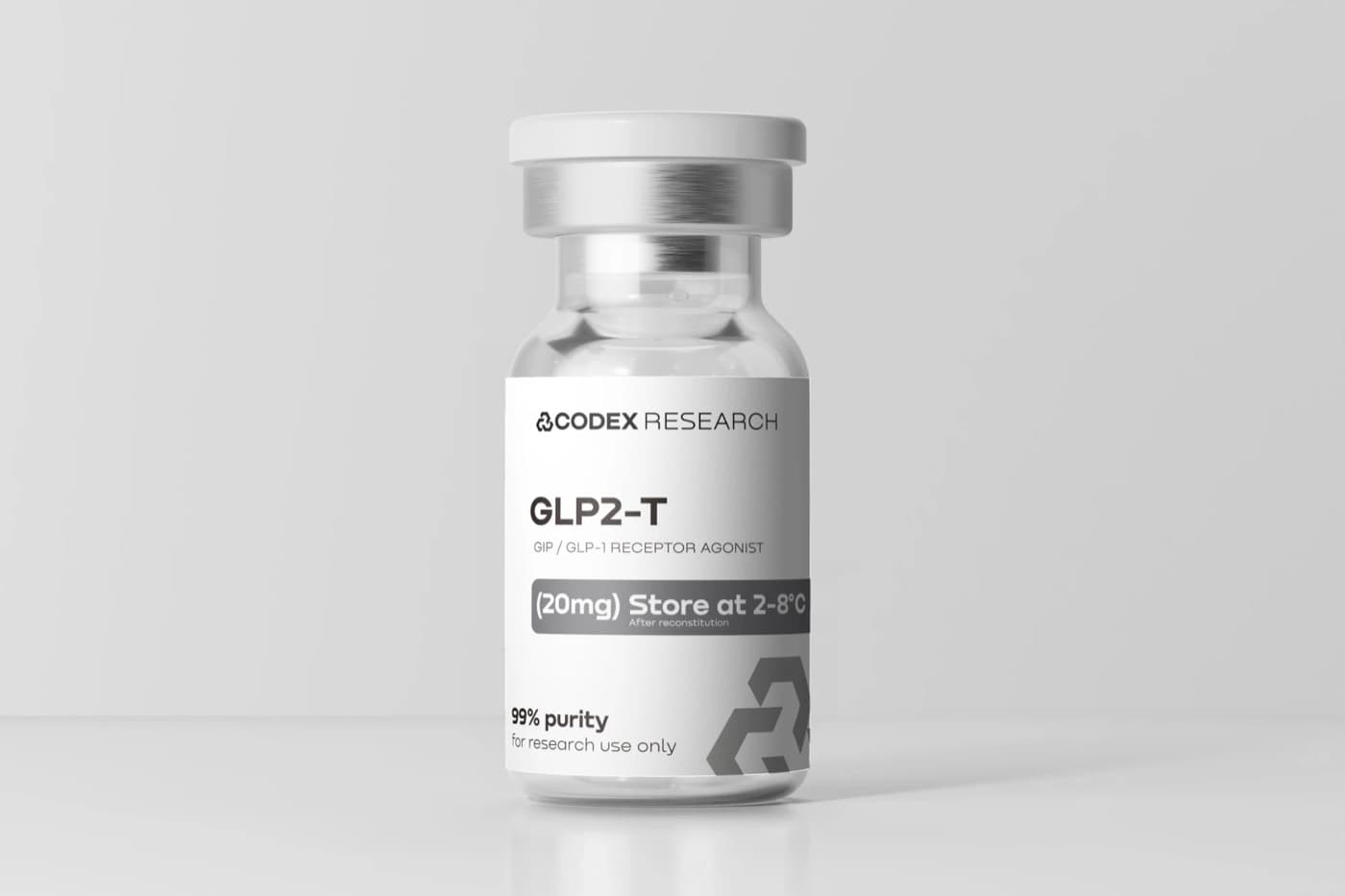
  • Reconstitute: add 2 mL of bacteriostatic water for a 10 mg/mL solution.
  • Amounts in the chart: 2.5 mg-15 mg each time, by subcutaneous injection, once a week.
  • Easy measuring: at 10 mg/mL, one unit (0.01 mL) on a U-100 insulin syringe holds about 100 mcg.
  • Storage: freeze-dried, keep it sealed, cold and away from light (frozen for long storage). Once mixed, refrigerate at 2-8 °C and avoid freezing and thawing.

Tirzepatide is a once-weekly injection that activates both the GIP and GLP-1 receptors, approved by the FDA for type 2 diabetes and chronic weight management. Large randomised trials have tested it for blood sugar, weight, sleep apnoea, heart failure and cardiovascular outcomes.

06

Tirzepatide 20 mg protocol overview

  • Primary calculation: 20 mg made up to 2 mL equals 10 mg/mL.
  • Amounts shown: 2.5 mg-15 mg per administration. The escalation in the FDA label of the approved drug, worked out for a research vial.
  • Route and frequency: subcutaneous injection, once a week.
  • Evidence ceiling: 12 of the 12 studies with a dose in our library were done in people.
  • Regulatory status: FDA-approved as prescription drugs (Mounjaro for type 2 diabetes, Zepbound for chronic weight management).
  • Approved drug: the prescription drug has its own dosing in its FDA label. See the label dosing.
07

How to read the Tirzepatide dosage chart

A 20 mg vial holds 20,000 mcg of Tirzepatide. Adding 2 mL gives 10 mg/mL, so one U-100 unit (0.01 mL) holds 100 mcg. To get the units for an amount, divide it by 100 mcg. The units are a volume mark on the syringe, not a measure of potency.

  • 2.5 mg: 0.25 mL, or 25 U-100 units.
  • 5 mg: 0.5 mL, or 50 U-100 units.
  • 7.5 mg: 0.75 mL, or 75 U-100 units.
  • 10 mg: 1 mL, or 100 U-100 units.
  • 12.5 mg: 1.25 mL, or 125 U-100 units, more than one 1 mL syringe (2 injections).
  • 15 mg: 1.5 mL, or 150 U-100 units, more than one 1 mL syringe (2 injections).

Vial coverage by mass: 8 full amounts of 2.5 mg, 4 full amounts of 5 mg, 2 full amounts of 7.5 mg, 2 full amounts of 10 mg, 1 full amounts of 12.5 mg, 1 full amounts of 15 mg per vial, before any handling loss.

If a different volume of water is used, every unit figure changes: recalculate with the calculator above.
08

Human Tirzepatide dosage evidence

Type 2 diabetes

  • SURPASS-1: in people early in type 2 diabetes, HbA1c fell by about 1.9% to 2.1% at 40 weeks vs no change on placebo, with 7 to 9.5 kg of weight loss (Rosenstock 2021).
  • SURPASS-2: against semaglutide 1 mg, all three tirzepatide doses lowered HbA1c and weight more (Frías 2021).
  • SURPASS-4: in people at high cardiovascular risk, tirzepatide lowered HbA1c more than insulin glargine, with less hypoglycaemia (Del Prato 2021).
  • SURPASS-CVOT: in 13,299 people with type 2 diabetes and heart or vessel disease, major cardiovascular events were 12.2% on tirzepatide vs 13.1% on dulaglutide, a drug already shown to lower cardiovascular risk. Tirzepatide was shown to be no worse, but not better (Nicholls 2025).

Weight

  • SURMOUNT-1: adults with obesity or overweight and no diabetes lost a mean 15.0% to 20.9% of body weight at 72 weeks depending on dose, against 3.1% on placebo (Jastreboff 2022).
  • Three-year follow-up: in SURMOUNT-1 participants with prediabetes, weight loss held at 12% to 20% after 176 weeks, and fewer developed type 2 diabetes (1.3% vs 13.3%) (Jastreboff 2025).
  • SURMOUNT-2: in adults with obesity and type 2 diabetes, weight loss was smaller, 12.8% to 14.7% vs 3.2% (Garvey 2023).
  • SURMOUNT-4: people switched to placebo after 36 weeks regained 14% of their weight over the next year, while those who continued lost a further 5.5% (Aronne 2024).
  • SURMOUNT-5: in a head-to-head open-label trial, weight loss at 72 weeks was 20.2% with tirzepatide vs 13.7% with semaglutide (Aronne 2025).

Weight-related conditions

  • Sleep apnoea: in two 52-week trials in adults with moderate-to-severe obstructive sleep apnoea and obesity, breathing interruptions fell by 25 to 29 events per hour vs about 5 on placebo (Malhotra 2024).
  • Heart failure: in 731 people with heart failure with preserved ejection fraction and obesity, cardiovascular death or worsening heart failure occurred in 9.9% vs 15.3% on placebo, mostly through fewer heart-failure events (Packer 2025).

Verdict: tirzepatide's evidence is strong for lowering blood sugar and body weight, with several large double-blind trials and two head-to-head comparisons with semaglutide. Evidence on hard outcomes is newer: it was not inferior to dulaglutide for heart attacks and strokes, and it reduced heart-failure events in one trial. As with semaglutide, most of the weight comes back when the drug is stopped, and almost all trials were funded by the manufacturer.

Doses used in human studies

  • Jastreboff AM 2022: 5 mg, 10 mg or 15 mg once weekly, after a 20-week escalation period (Subcutaneous, once weekly; 72 weeks)
  • Frias JP 2018: 1 mg, 5 mg, 10 mg or 15 mg once weekly (comparators: dulaglutide 1.5 mg or placebo) (Subcutaneous, once weekly; 26 weeks)
  • Rosenstock J 2021: 5 mg, 10 mg or 15 mg once weekly (Subcutaneous, once weekly; 40 weeks)
  • Frías JP 2021: Tirzepatide 5 mg, 10 mg or 15 mg once weekly vs semaglutide 1 mg once weekly (Subcutaneous, once weekly; 40 weeks)
  • Del Prato S 2021: Tirzepatide 5 mg, 10 mg or 15 mg once weekly vs insulin glargine (Subcutaneous, once weekly; 52 weeks for the primary endpoint)
  • Garvey WT 2023: 10 mg or 15 mg once weekly (Subcutaneous, once weekly; 72 weeks)
  • Aronne LJ 2024: Maximum tolerated dose (10 mg or 15 mg) once weekly (Subcutaneous, once weekly; 36-week open-label lead-in, then 52 weeks randomised)
  • Malhotra A 2024: Maximum tolerated dose (10 mg or 15 mg) once weekly (Subcutaneous, once weekly; 52 weeks)
  • Packer M 2025: Up to 15 mg once weekly (Subcutaneous, once weekly; Median follow-up 104 weeks)
  • Jastreboff AM 2025: 5 mg, 10 mg or 15 mg once weekly (Subcutaneous, once weekly; 176 weeks on treatment plus 17 weeks off treatment)
  • Aronne LJ 2025: Maximum tolerated dose of tirzepatide (10 mg or 15 mg) vs semaglutide (1.7 mg or 2.4 mg) once weekly (Subcutaneous, once weekly; 72 weeks)
  • Nicholls SJ 2025: Tirzepatide up to 15 mg once weekly vs dulaglutide 1.5 mg once weekly (Subcutaneous, once weekly)

Every study dose, including animal and cell studies, is in the Tirzepatide dose table.

09

Tirzepatide safety, side effects and evidence limits

The most common side effects in trials were gastrointestinal: nausea, diarrhoea, vomiting, constipation and reduced appetite, mostly mild to moderate and concentrated in the dose-escalation period. In the phase 2 trial they rose with dose, from 23.1% on 1 mg to 66.0% on 15 mg (Frias 2018), and in SUMMIT side effects led 6.3% to stop the drug vs 1.4% on placebo (Packer 2025). Other known or suspected risks:

  • Thyroid C-cell tumours: the US prescribing information carries a boxed warning because tirzepatide caused thyroid C-cell tumours in rats. Whether this applies to people is not known. Human database studies so far looked at GLP-1 drugs as a class and gave mixed results (Bezin 2023; Pasternak 2024).
  • Gallbladder and pancreas: GLP-1 drugs as a class are linked to more gallstones and gallbladder inflammation, especially at weight-loss doses (He 2022), and the prescribing information warns about pancreatitis. These class studies mostly did not include tirzepatide.
  • Hypoglycaemia: low blood sugar was uncommon on tirzepatide alone, but more likely when combined with insulin or sulfonylureas (Del Prato 2021).
  • Weight regain: stopping the drug is usually followed by regaining much of the lost weight (Aronne 2024).
  • Product quality: compounded and "research" tirzepatide are not the approved products. Their identity, strength, purity and sterility have not been checked by the FDA.
  • FDA: FDA-approved as prescription drugs (Mounjaro for type 2 diabetes, Zepbound for chronic weight management).
  • Evidence limits: reported use is not evidence that a schedule works or is safe. Animal doses do not convert to people, and research products are not made or checked for use in people.
  • Status checked on: Oct 26, 2026.
10

Questions about the Tirzepatide 20 mg vial

How much bacteriostatic water goes into a 20 mg Tirzepatide vial?

There is no single correct volume: it only changes the concentration. For a 20 mg vial, 1 mL gives 20,000 mcg/mL, 2 mL gives 10,000 mcg/mL, 3 mL gives 6,667 mcg/mL. More water makes small amounts easier to measure; less water keeps volumes small. Whatever volume is used, write it on the label.

What does one unit on an insulin syringe mean?

On a U-100 syringe, 100 units = 1 mL, so one unit is 0.01 mL. How much peptide that holds depends on the concentration of the vial, which depends on how much water was added.

Can doses from animal studies of Tirzepatide be converted to people?

No. Animal doses are reported per kilogram for a different species, and scaling them to people is not reliable. That is why Upzo shows each study dose next to its study, unconverted.

Research and education only. Not medical advice. Many peptides on this site are not approved by the FDA for human use. Doses shown are the ones used in published studies and are not a recommendation. Talk to a licensed clinician before using any of them. Read the full disclaimer.