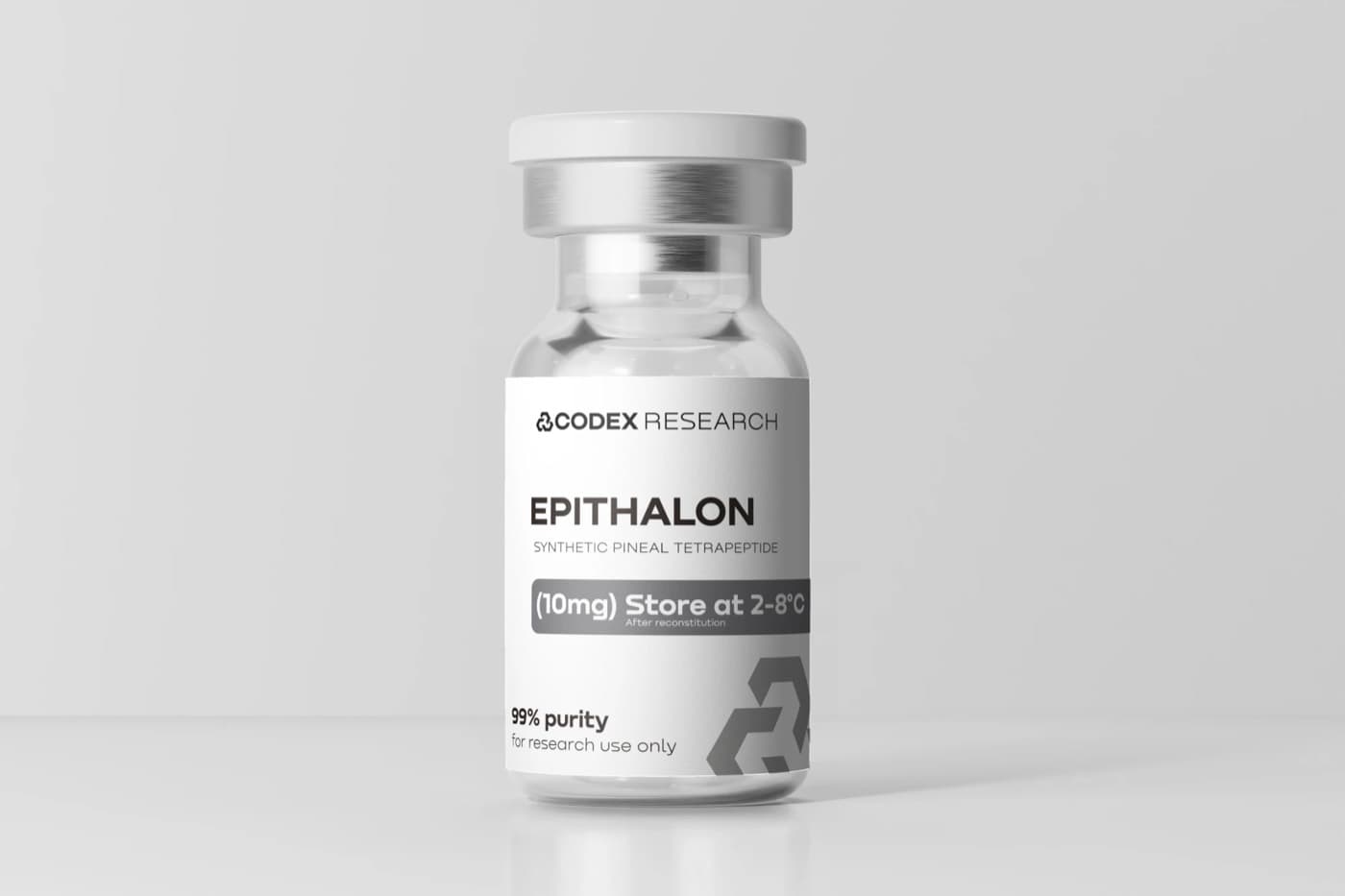
Epitalon is a synthetic four-amino-acid peptide (Ala-Glu-Asp-Gly) modelled on a pineal gland extract and studied mainly by one Russian research group for effects related to ageing. Its evidence is mostly from cells and animals, and it is not FDA-approved.
Not FDA-approved
Human trials
Also known as Epithalon, Epithalone, AEDG peptide, Ala-Glu-Asp-Gly
Epitalon (also spelled epithalon) is a synthetic peptide of four amino acids: alanine, glutamic acid, aspartic acid and glycine (AEDG). It was designed from the amino acid make-up of epithalamin, an extract of cattle pineal gland, the small gland in the brain that produces melatonin (Araj 2025). Epitalon and epithalamin are different products, and results for one should not be read as results for the other (Jain 2026).
Almost all epitalon research comes from one group: Vladimir Khavinson and colleagues at the St Petersburg Institute of Bioregulation and Gerontology in Russia, and their close collaborators. Their work covers telomeres, melatonin, lifespan in rodents and small human reports. Few independent labs have tested it; one exception is a 2025 cell study from a UK university (Al-Dulaimi 2025).
It has never been through a modern, independently run clinical trial. A 2026 review concluded that it is biologically active but clinically unproven, with inadequate data on how the body handles it, on dosing and on long-term safety (Jain 2026).
Type: synthetic peptide, 4 amino acids (AEDG).
Studied for: telomeres and cell ageing, melatonin rhythm, lifespan in rodents, retinal degeneration.
Strongest evidence: cell and animal studies, mostly from one group. Human data are small, older reports with unclear methods.
Legal status: not approved as a medicine in the US.
02
Epitalon protocols and supplies
Schedules reported for this peptide, with the syringe measure for each step and the supplies each one takes. Reported use is not evidence that a schedule works or is safe, and none of this is medical advice.
20-day course
Subcutaneous injection, once a day
Community-reported
Reported in the research community. It has not been tested as a schedule in human trials. Worked out with a 10 mg vial + 2 mL bacteriostatic water (5 mg/mL, 50 mcg per unit). Usually described as one course followed by several months without it.
Amounts as reported, with the syringe or spray measure for the vial below. Not a recommendation.
Period
Amount each time
U-100 units
Volume
Days 1-20
5 mg
100
1 mL
Minimum supplies, worked out from the amounts above. Add a margin for losses.
Item
20 days
Injections
20
Total peptide
100 mg
Epitalon vials (10 mg)
10
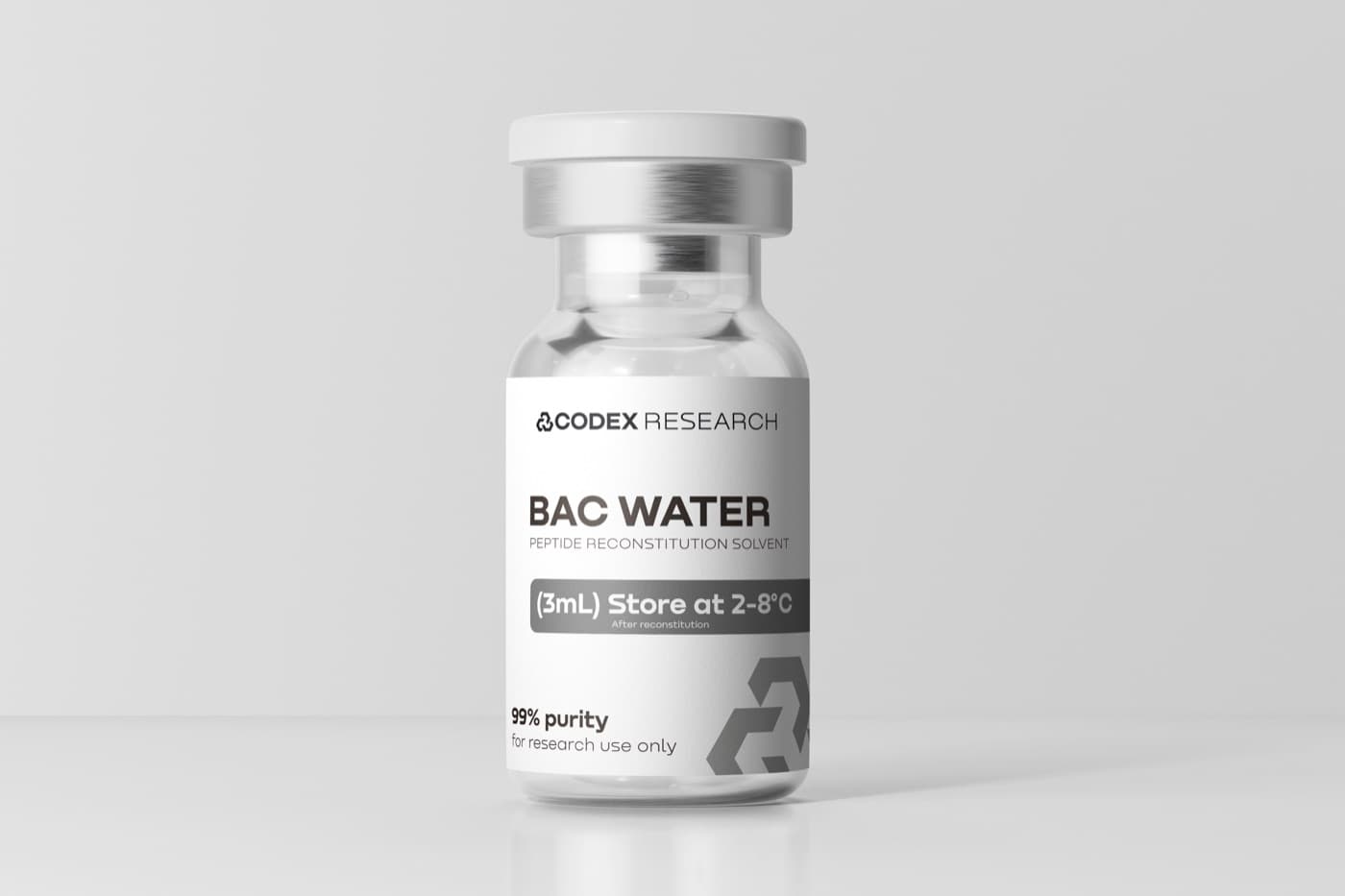
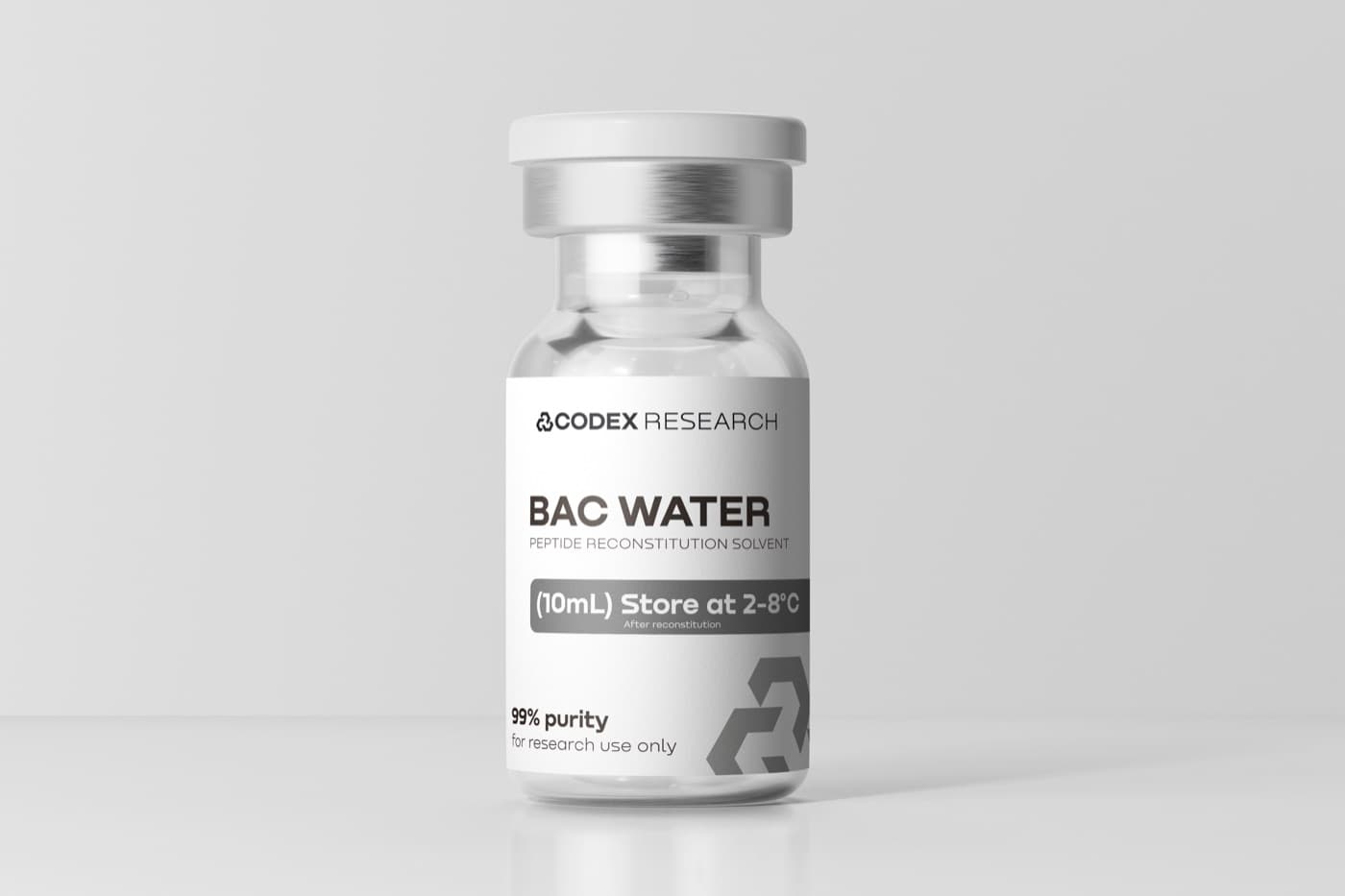
Bacteriostatic water
20 mL
Water bottles (10 mL)
2
U-100 insulin syringes
20
Alcohol swabs (boxes of 100)
40 (1)
03
Epitalon doses used in studies
The dose each published study gave its participants, copied from the paper. Not dosing instructions; animal doses do not convert directly to people.
At a glance: 9 studies report a dose (3 in people, 2 in animals, 4 in cells).
Doses as reported by each study. Not a recommendation.
0.1 to 1.0 µg/mL daily for 4 days (breast cancer cells); 1.0 µg/mL daily for 3 weeks (normal fibroblasts and epithelial cells) (from the full text)
—
04
Evidence at a glance
What has been studied, by type of evidence. A result in animals or cells is a reason to study something in people, not proof that it works in people.
In humans
Summarised
The human reports we could verify all come from the Khavinson group and give few methodological details in their abstracts:
Retinitis pigmentosa: the authors reported a positive clinical effect in 90% of patients with degenerative retinal disease, without patient numbers or control details in the abstract (Khavinson 2002).
Melatonin: in elderly people with low pineal function, epitalon and epithalamin were followed by higher night-time melatonin; the article is in Russian (Korkushko 2007).
Mortality in elderly people: a long-term study of 266 elderly people reported lower death rates, but it used the extracts epithalamin and thymalin, not epitalon (Khavinson 2003).
Verdict: there is no reliable human evidence that epitalon slows ageing or improves any health outcome. The available reports are small, from the developing group, and not independently replicated.
In animals
Summarised
Lifespan and tumours in mice
In female mice given monthly courses of injections from 3 months of age, average lifespan did not change, but the longest-lived 10% lived about 13% longer, and leukaemia and chromosome damage were less frequent; total tumour rates were unchanged (Anisimov 2003).
Hormones in old monkeys
In old rhesus monkeys, epitalon was followed by higher night-time melatonin and better glucose and insulin control, with no change in young monkeys (Goncharova 2005).
Retina
In rats with inherited retinal degeneration, epitalon was followed by better retinal function and structure (Khavinson 2002).
In cells (in vitro)
Summarised
In human fetal fibroblasts, epitalon switched on telomerase and lengthened telomeres (Khavinson 2003), and ageing cells kept dividing beyond their normal limit (Khavinson 2004). An independent UK group confirmed longer telomeres in normal cells, and also found telomere lengthening in breast cancer cells through a different route (Al-Dulaimi 2025). In human stem cells it raised markers of nerve-cell development (Khavinson 2020).
Proposed mechanisms from cell and animal studies. A plausible mechanism is not evidence of an effect in people.
The proposed mechanisms come from cell, animal and computer studies:
Telomerase: it increased expression of the telomerase catalytic subunit (hTERT) and telomerase activity in normal human cells (Khavinson 2003; Al-Dulaimi 2025).
Pineal and melatonin: it raised night-time melatonin in old monkeys (Goncharova 2005).
Gene regulation: computer modelling suggested it binds histone proteins, which could explain changes in gene expression; this has not been shown directly (Khavinson 2020).
06
Reconstitution
How concentration changes with the amount of liquid added. A U-100 insulin syringe holds 1 mL in 100 units, so each unit is 0.01 mL. Step-by-step guide.
Step by step
Wash your hands and work on a clean, uncluttered surface. Let a refrigerated vial reach room temperature so the stopper is easier to pierce.
Wipe the rubber stopper of the peptide vial and of the bacteriostatic water with a fresh alcohol swab, and let them air-dry.
Draw the chosen volume of bacteriostatic water into a sterile syringe. With 2 mL, a 10 mg vial ends up at 5,000 mcg/mL, or 50 mcg per U-100 unit.
Insert the needle through the stopper and let the water run slowly down the inside wall of the vial, not straight onto the powder.
Swirl or roll the vial gently until the powder dissolves. Do not shake it: foaming can damage some peptides.
Check the solution against the light. It should be clear; cloudiness or particles mean something is wrong with the vial or the water.
Write the date and the volume of water on the label. Every unit calculation later depends on that volume.
Store the reconstituted Epitalon vial in the refrigerator, away from light.
Concentration by volume
A 10 mg vial: concentration after adding the liquid, and how much peptide each U-100 unit (0.01 mL) holds.
Arithmetic only. It assumes the vial holds exactly what the label says.
Concentration
5,000 mcg/mL
Per U-100 unit
50 mcg
Volume for your amount
—
07
Measuring with a U-100 syringe
What each mark on an insulin syringe holds once the vial is mixed. This is arithmetic, not a dose.
Reading a U-100 syringe: how much peptide each mark holds in a 10 mg vial mixed with 2 mL. Not a dose.
Syringe mark
Volume
Peptide in that volume
5 units
0.05 mL
250 mcg
10 units
0.1 mL
500 mcg
20 units
0.2 mL
1 mg
25 units
0.25 mL
1.25 mg
50 units
0.5 mL
2.5 mg
100 units
1 mL
5 mg
A U-100 insulin syringe holds 1 mL in 100 units, so each unit is 0.01 mL. The marks measure volume, not peptide.
Syringes come in 0.3 mL (30 units), 0.5 mL (50 units) and 1 mL (100 units) sizes. The smaller ones have finer marks and are easier to read for small volumes.
Read the volume at the top edge of the plunger's rubber seal, at eye level.
Tap out air bubbles before reading: a bubble takes up volume and makes the reading wrong.
Use a new sterile syringe and needle every time, and dispose of them in a sharps container.
08
Supplies
What reconstituting and measuring a vial takes.
The peptide vial, with its certificate of analysis (COA) for that batch. See how to read a COA.
Bacteriostatic water (water with 0.9% benzyl alcohol), which keeps a multi-use vial from growing bacteria. Sterile water has no preservative.
Sterile syringes to add the water, and U-100 insulin syringes to measure.
Alcohol swabs for the stoppers.
A sharps container for used needles.
A label or marker to write the date and the volume of water on the vial.
09
Side effects, safety and legal status
Side effects and safety in people are unknown: there are no modern controlled trials, and data on how the body processes it are lacking (Jain 2026). In its compounding review, FDA said compounded epitalon may carry a risk of immune reactions and impurity problems and that it had not identified safety information for the proposed route.
Product quality: epitalon sold online is not checked by any regulator for identity, purity, dose or sterility. A 2015 report from Belgium's Scientific Institute of Public Health identified epitalon in two illegal pharmaceutical preparations.
Telomeres and cancer: lengthening telomeres lets cells keep dividing, which is also how cancer cells become immortal. Epitalon lengthened telomeres in breast cancer cell lines (Al-Dulaimi 2025), although a mouse study found fewer leukaemias (Anisimov 2003). The long-term effect in people is unknown.
Single-group evidence: most data come from the developers, so benefits and safety have not been independently checked.
Injection risks: any injected product that is not sterile can cause infection or abscesses.
FDA
Not FDA-approved for any use. It was in Category 2 of FDA's compounding bulk substances list (possible significant safety risks); FDA's April 2026 update lists its nomination as withdrawn, which is not an approval.
Status checked on
Oct 26, 2026
10
Storing Epitalon
Before mixing
Freeze-dried (lyophilised) peptide is the most stable form. It is usually kept refrigerated, or frozen for long storage, sealed and away from light.
Heat, moisture and light speed up degradation. Keep the vial in its box and avoid leaving it in a car or by a window.
After mixing
Keep the reconstituted vial refrigerated and away from light. Do not freeze it again: freezing and thawing a solution can break the peptide down.
How long a mixed vial stays good depends on the peptide and the diluent, and for most research peptides there is no published stability data. Follow the supplier's guidance and discard any vial that turns cloudy.
Pierce the stopper as few times as possible, and always with a new sterile needle after wiping it with alcohol.
Write the volume of water on the label (for example "2 mL"). Without it, the unit calculations cannot be checked later.
11
Questions about Epitalon
Is Epitalon FDA-approved?
Not FDA-approved for any use. It was in Category 2 of FDA's compounding bulk substances list (possible significant safety risks); FDA's April 2026 update lists its nomination as withdrawn, which is not an approval.
What doses of Epitalon have been studied?
Our library has 11 studies on Epitalon. The doses each one used are in section 03, next to the study. They are not dosing instructions.
How much Epitalon is in each syringe unit?
It depends on how much liquid is added to the vial. For a 10 mg vial with 2 mL, each U-100 unit holds 50 mcg. The reconstitution table and calculator work it out for other volumes.
Is epitalon the same as epithalamin?
No. Epithalamin is an extract of cattle pineal gland containing many peptides. Epitalon is a single synthetic four-amino-acid peptide designed from it. Some well-known human studies, including one on mortality in elderly people, used epithalamin rather than epitalon.
Does epitalon lengthen telomeres in people?
This has been shown in cells in a dish, not in people. We could not find a controlled human study that measured telomere length after epitalon.
Why is most epitalon research from Russia?
Vladimir Khavinson's group in St Petersburg, which also studied the pineal extract epithalamin, has published most of the studies. Outside that group we found only one independent study, in cells, published in 2025.
How much bacteriostatic water goes into a 10 mg Epitalon vial?
There is no single correct volume: it only changes the concentration. For a 10 mg vial, 1 mL gives 10,000 mcg/mL, 2 mL gives 5,000 mcg/mL, 3 mL gives 3,333 mcg/mL. More water makes small amounts easier to measure; less water keeps volumes small. Whatever volume is used, write it on the label.
What does one unit on an insulin syringe mean?
On a U-100 syringe, 100 units = 1 mL, so one unit is 0.01 mL. How much peptide that holds depends on the concentration of the vial, which depends on how much water was added.
Can doses from animal studies of Epitalon be converted to people?
No. Animal doses are reported per kilogram for a different species, and scaling them to people is not reliable. That is why Upzo shows each study dose next to its study, unconverted.
How should Epitalon be stored?
Unopened freeze-dried vials are usually kept refrigerated and away from light. Once mixed, keep the vial refrigerated and follow the supplier's guidance on how long it lasts.
12
References
Epithalon peptide induces telomerase activity and telomere elongation in human somatic cells. Khavinson VKh, Bondarev IE, Butyugov AA. Bulletin of Experimental Biology and Medicine. 2003;135:590-592. doi:10.1023/a:1025493705728
Peptide promotes overcoming of the division limit in human somatic cell. Khavinson VKh, Bondarev IE, Butyugov AA, et al. Bulletin of Experimental Biology and Medicine. 2004;137:503-506. doi:10.1023/b:bebm.0000038164.49947.8c
Effect of Epitalon on biomarkers of aging, life span and spontaneous tumor incidence in female Swiss-derived SHR mice. Anisimov VN, Khavinson VKh, Popovich IG, et al. Biogerontology. 2003;4:193-202. doi:10.1023/a:1025114230714
Pineal peptides restore the age-related disturbances in hormonal functions of the pineal gland and the pancreas. Goncharova ND, Vengerin AA, Khavinson VKh, et al. Experimental Gerontology. 2005;40:51-57. doi:10.1016/j.exger.2004.10.004
Normalizing effect of the pineal gland peptides on the daily melatonin rhythm in old monkeys and elderly people. Korkushko OV, Lapin BA, Goncharova ND, et al. Advances in Gerontology (Uspekhi Gerontologii). 2007;20:74-85. PMID 17969590
Pineal-regulating tetrapeptide epitalon improves eye retina condition in retinitis pigmentosa. Khavinson V, Razumovsky M, Trofimova S, et al. Neuro Endocrinology Letters. 2002;23:365-368. PMID 12195242
Peptides of pineal gland and thymus prolong human life. Khavinson VKh, Morozov VG. Neuro Endocrinology Letters. 2003;24:233-240. PMID 14523363
AEDG Peptide (Epitalon) Stimulates Gene Expression and Protein Synthesis during Neurogenesis: Possible Epigenetic Mechanism. Khavinson V, Diomede F, Mironova E, et al. Molecules. 2020;25:609. doi:10.3390/molecules25030609
Epitalon increases telomere length in human cell lines through telomerase upregulation or ALT activity. Al-Dulaimi S, Thomas R, Matta S, et al. Biogerontology. 2025;26:178. doi:10.1007/s10522-025-10315-x
Overview of Epitalon-Highly Bioactive Pineal Tetrapeptide with Promising Properties. Araj SK, Brzezik J, Mądra-Gackowska K, et al. International Journal of Molecular Sciences. 2025;26:2691. doi:10.3390/ijms26062691
Epitalon and Epithalamin: A Narrative Review of Mechanistic, Preclinical, and Clinical Evidence. Jain A, Gallacher DM, Issa MA, et al. International Journal of Molecular Sciences. 2026;27:8922. doi:10.3390/ijms27198922
Research supplier
For laboratory research use only.
Codex Research LabShips from Panama City · US domestic shipping
Research and education only. Not medical advice. Many peptides on this site are not approved by the FDA for human use. Doses shown are the ones used in published studies and are not a recommendation. Talk to a licensed clinician before using any of them. Read the full disclaimer.