Growth hormone secretagogue

Tesamorelin (20 mg vial) dosage protocol

Dosage chart, U-100 syringe units and supplies for a 20 mg vial of Tesamorelin mixed with 3 mL. For the full research summary, see the Tesamorelin page.

01

Tesamorelin quick reference (20 mg vial)

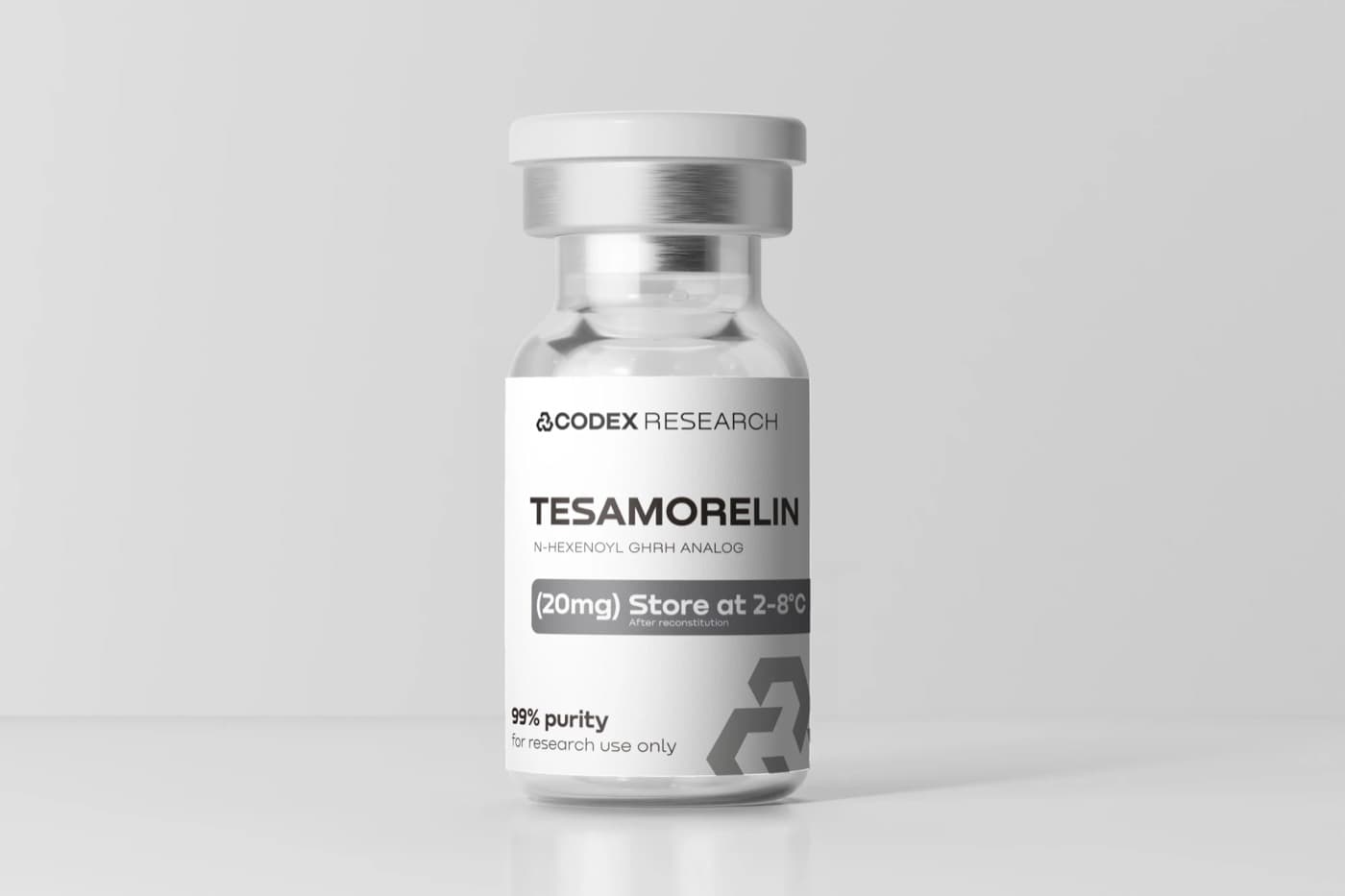
Vial contents
20 mg Tesamorelin
Final volume
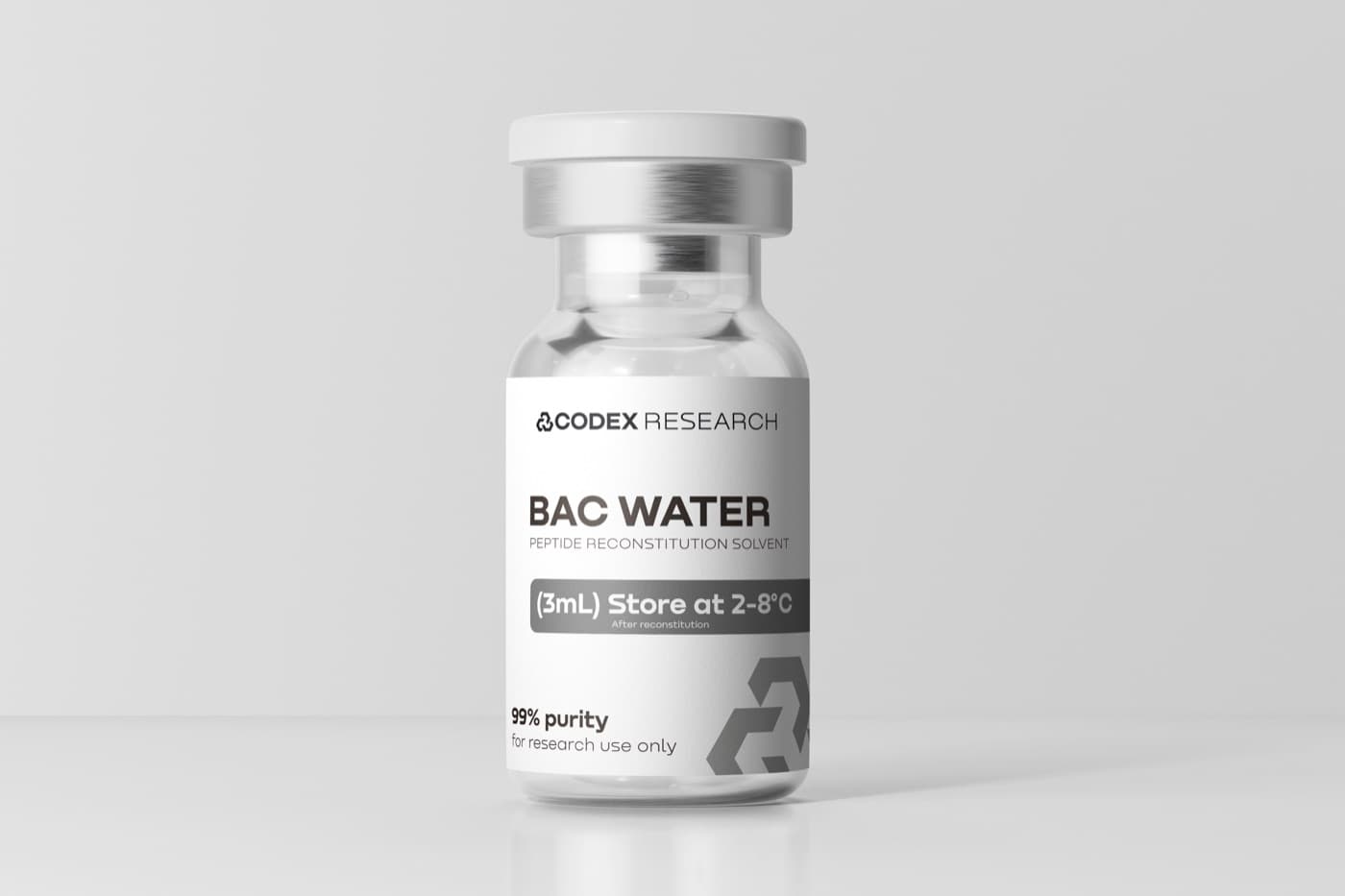
3 mL
Concentration
6.67 mg/mL
One U-100 unit
66.7 mcg in 0.01 mL
02

Tesamorelin dosage chart

Amounts as reported for this peptide, with the syringe measure for this vial. Reported use is not evidence that a schedule works or is safe, and none of this is medical advice.

Phase 3 amount, once daily

  • Subcutaneous injection, once a day
  • From clinical trials

The dose escalation used in published human trials, worked out for a research vial. Worked out with a 20 mg vial + 3 mL bacteriostatic water (6.67 mg/mL, 66.7 mcg per unit).

Amounts as reported, with the syringe or spray measure for the vial below. Not a recommendation.
PeriodAmount each timeU-100 unitsVolume
Week 1 on2 mg300.3 mL

Reconstitution steps

  1. Draw 3 mL of bacteriostatic water with a sterile syringe.
  2. Inject it slowly down the inside wall of the vial, not onto the powder, to avoid foaming.
  3. Swirl or roll the vial gently until the powder dissolves. Do not shake it.
  4. Label it with the date and the volume of water, and refrigerate at 2-8 °C (36-46 °F), away from light.
03

Supplies needed

Minimum supplies for each length of the schedule above, with 20 mg vials and 3 mL of water per vial. One new syringe per injection (two if over 1 mL), two alcohol swabs per injection, 10 mL water bottles.

Phase 3 amount, once daily

  • Subcutaneous injection, once a day
  • From clinical trials
Minimum supplies, worked out from the amounts above. Add a margin for losses.
Item8 weeks12 weeks16 weeks
Injections5684112
Total peptide112 mg168 mg224 mg
Tesamorelin vials (20 mg)6912
Bacteriostatic water18 mL27 mL36 mL
Water bottles (10 mL)234
U-100 insulin syringes5684112
Alcohol swabs (boxes of 100)112 (2)168 (2)224 (3)

Research supplier

For laboratory research use only.

Codex Research LabShips from Panama City · US domestic shipping

04

Peptide reconstitution

Try other volumes of water: the concentration and the units per amount change with it.

Reconstitution calculator

Arithmetic only. It assumes the vial holds exactly what the label says.

Concentration
6,667 mcg/mL
Per U-100 unit
66.67 mcg
Volume for your amount
—
Concentration of a 20 mg vial after adding the liquid, and peptide per U-100 unit (0.01 mL).
Liquid addedConcentrationPer unit
1 mL20,000 mcg/mL200 mcg
2 mL10,000 mcg/mL100 mcg
3 mL6,667 mcg/mL66.7 mcg
05

Tesamorelin vial and research context

  • Reconstitute: add 3 mL of bacteriostatic water for a 6.67 mg/mL solution.
  • Amounts in the chart: 2 mg each time, by subcutaneous injection, once a day.
  • Easy measuring: at 6.67 mg/mL, one unit (0.01 mL) on a U-100 insulin syringe holds about 66.7 mcg.
  • Storage: freeze-dried, keep it sealed, cold and away from light (frozen for long storage). Once mixed, refrigerate at 2-8 °C and avoid freezing and thawing.

Tesamorelin is a synthetic version of growth hormone-releasing hormone with a small chemical addition that makes it more stable. Sold as Egrifta, it is FDA-approved for one use: reducing excess abdominal fat in adults with HIV and lipodystrophy.

06

Tesamorelin 20 mg protocol overview

  • Primary calculation: 20 mg made up to 3 mL equals 6.67 mg/mL.
  • Amounts shown: 2 mg per administration. The dose escalation used in published human trials, worked out for a research vial.
  • Route and frequency: subcutaneous injection, once a day.
  • Evidence ceiling: 9 of the 9 studies with a dose in our library were done in people.
  • Regulatory status: FDA-approved in 2010 (now sold as Egrifta SV and Egrifta WR) for one indication: reducing excess abdominal fat in adults with HIV and lipodystrophy. Research products are not the approved drug. WADA: Prohibited at all times (growth hormone releasing factors).
  • Approved drug: the prescription drug has its own dosing in its FDA label. See the label dosing.
07

How to read the Tesamorelin dosage chart

A 20 mg vial holds 20,000 mcg of Tesamorelin. Adding 3 mL gives 6.67 mg/mL, so one U-100 unit (0.01 mL) holds 66.7 mcg. To get the units for an amount, divide it by 66.7 mcg. The units are a volume mark on the syringe, not a measure of potency.

  • 2 mg: 0.3 mL, or 30 U-100 units.

Vial coverage by mass: 10 full amounts of 2 mg per vial, before any handling loss.

If a different volume of water is used, every unit figure changes: recalculate with the calculator above.

Vial sizes compared, each mixed with 2 mL. A larger vial gives a stronger solution, so each unit holds more peptide.
VialConcentrationPer unitIn 10 units
10 mg5,000 mcg/mL50 mcg500 mcg
20 mg (this page)10,000 mcg/mL100 mcg1 mg
08

Human Tesamorelin dosage evidence

The main human studies, all randomised and placebo-controlled unless stated:

  • Phase 2 dose-finding: in 61 people with HIV and central fat, 2 mg daily for 12 weeks reduced trunk fat by 9.2% vs a 0.8% rise with placebo. Visceral fat fell 15.7%, but this was not statistically different from placebo (Falutz 2005).
  • First phase 3 trial: 412 people; 2 mg daily for 26 weeks reduced visceral fat and improved lipid levels compared with placebo (Falutz 2007). In the 26-week extension, the reduction was maintained at about 18% over 52 weeks, but fat returned after stopping (Falutz 2008).
  • Second phase 3 trial: 404 people; visceral fat fell 10.9% vs 0.6% with placebo at 6 months, with no change in glucose measures. Again, the gains were rapidly lost in those switched to placebo (Falutz 2010).
  • Pooled phase 3 data: across 806 people, the placebo-adjusted reduction in visceral fat was 15.4% at 26 weeks, with no meaningful change in fat under the skin and a mean IGF-1 rise of 108 ng/ml (Falutz 2010).
  • Liver fat: in 50 people with HIV, 6 months reduced visceral fat and liver fat; fasting glucose rose at 2 weeks but not by 6 months (Stanley 2014). In an NIH-funded trial in 61 people with HIV and fatty liver disease, 12 months reduced the liver fat fraction by 4.1 percentage points more than placebo (Stanley 2019).
  • Type 2 diabetes: in 53 people with type 2 diabetes (without HIV), 12 weeks did not change insulin response or blood sugar control (Clemmons 2017).
  • Thinking skills in older adults: in 152 adults aged 55-87, 1 mg nightly for 20 weeks had a favourable effect on a combined cognitive score, mainly executive function. Adverse events were reported by 68% on tesamorelin vs 36% on placebo (Baker 2012).

A 2026 meta-analysis of five randomised trials in people with HIV confirmed lower visceral fat, trunk fat, liver fat and waist size, and higher lean mass, with side effects such as joint pain, muscle pain, tingling and injection-site redness (Badran 2026). In short: in people with HIV, tesamorelin reliably reduces visceral fat while it is used, and the effect fades after stopping. Whether this lowers heart disease or other hard outcomes has not been shown, and the evidence outside HIV is limited to small trials.

Doses used in human studies

  • Falutz J 2007: 2 mg once daily (Subcutaneous, once daily; 26 weeks)
  • Falutz J 2005: 1 mg or 2 mg once daily, or placebo (Subcutaneous, once daily; 12 weeks)
  • Falutz J 2008: 2 mg once daily, or placebo after re-randomisation (Subcutaneous, once daily; 26-week extension (52 weeks in total))
  • Falutz J 2010: 2 mg once daily, or placebo (2:1) (Subcutaneous, once daily; 6 months, plus a 6-month blinded extension)
  • Falutz J 2010: 2 mg once daily, or placebo (Subcutaneous, once daily; 26 weeks, plus a 26-week extension)
  • Stanley TL 2014: 2 mg once daily (n=28), or placebo (n=22) (Subcutaneous, once daily; 6 months)
  • Stanley TL 2019: 2 mg once daily, or placebo; then 2 mg daily open-label for all (Subcutaneous, once daily; 12 months, plus a 6-month open-label phase)
  • Clemmons DR 2017: 1 mg or 2 mg, or placebo (Subcutaneous; 12 weeks)
  • Baker LD 2012: 1 mg/day, 30 minutes before bedtime, or placebo (Subcutaneous, nightly (self-injected); 20 weeks, plus 10-week washout)

Every study dose, including animal and cell studies, is in the Tesamorelin dose table.

09

Tesamorelin safety, side effects and evidence limits

Tesamorelin's side effects are better documented than those of most peptides because of its approval. According to the FDA prescribing information, the most common side effects in trials were joint pain, injection-site redness and itching, pain in the arms or legs, swelling of the legs and muscle pain. More people stopped because of side effects on tesamorelin than on placebo (Falutz 2007).

  • Blood sugar: the prescribing information reports that more people on tesamorelin developed diabetes-range HbA1c than on placebo (5% vs 1%). Fasting glucose rose briefly in one trial (Stanley 2014).
  • Fluid retention: swelling, joint pain and carpal tunnel syndrome are listed warnings.
  • IGF-1 and cancer: IGF-1 is a growth factor. The label says the effects of long-term raised IGF-1 are unknown, and it should not be used by people with active cancer.
  • Allergic reactions and antibodies: hypersensitivity reactions occurred in trials, and about half of patients developed antibodies to tesamorelin.
  • Who should not use it (per the label): pregnant women, people with active cancer, and people whose pituitary or hypothalamus is damaged or removed.
  • Effects do not last: visceral fat came back after stopping (Falutz 2008). Long-term cardiovascular safety has not been established.
  • Research products: tesamorelin sold online as a research chemical is not the approved, quality-controlled drug.
  • Sport: growth hormone releasing factors are on the WADA prohibited list at all times.
  • FDA: FDA-approved in 2010 (now sold as Egrifta SV and Egrifta WR) for one indication: reducing excess abdominal fat in adults with HIV and lipodystrophy. Research products are not the approved drug.
  • WADA: Prohibited at all times (growth hormone releasing factors).
  • Evidence limits: reported use is not evidence that a schedule works or is safe. Animal doses do not convert to people, and research products are not made or checked for use in people.
  • Status checked on: Oct 26, 2026.
10

Questions about the Tesamorelin 20 mg vial

How much bacteriostatic water goes into a 20 mg Tesamorelin vial?

There is no single correct volume: it only changes the concentration. For a 20 mg vial, 1 mL gives 20,000 mcg/mL, 2 mL gives 10,000 mcg/mL, 3 mL gives 6,667 mcg/mL. More water makes small amounts easier to measure; less water keeps volumes small. Whatever volume is used, write it on the label.

What does one unit on an insulin syringe mean?

On a U-100 syringe, 100 units = 1 mL, so one unit is 0.01 mL. How much peptide that holds depends on the concentration of the vial, which depends on how much water was added.

Can doses from animal studies of Tesamorelin be converted to people?

No. Animal doses are reported per kilogram for a different species, and scaling them to people is not reliable. That is why Upzo shows each study dose next to its study, unconverted.

Research and education only. Not medical advice. Many peptides on this site are not approved by the FDA for human use. Doses shown are the ones used in published studies and are not a recommendation. Talk to a licensed clinician before using any of them. Read the full disclaimer.